A Supreme Court judge can continue in office till the age of:
- (a)60 years
- (b)62 years
- (c)65 years
- (d)67 years
Show SolutionHide Solution↓
65 years
Reason — A Supreme Court judge in India can continue in office until the age of 65 years.
31 solved questions from Solved 2025 Improvement Paper ICSE Class 10 History & Civics. Every answer follows the ICSE marking scheme.
A Supreme Court judge can continue in office till the age of:
65 years
Reason — A Supreme Court judge in India can continue in office until the age of 65 years.
Given below are details of a few Indian Citizens.
| Person | Age (In years) | Description |
|---|---|---|
| W | 20 | Is a famous actor |
| X | 48 | Has been convicted by court for corruption |
| Y | 35 | Has accepted a foreign citizenship |
| Z | 50 | Is a scientist |
Select the one who is eligible to be appointed as the Prime Minister of India.
Z
Reason — The President invites the leader of the majority party in the Lok Sabha to form the Government, and to be a member of the Lok Sabha, a person must be an Indian citizen, with at least 25 years of age, and not a proclaimed criminal. Only Person Z meets the required criteria.
How can Mr. Amit, a non-member of the Parliament be appointed to the Union Cabinet?
He has to become a member of either house within six months of appointment.
Reason — Mr. Amit can be appointed to the Union Cabinet, but he has to become a member of either house within six months of appointment.
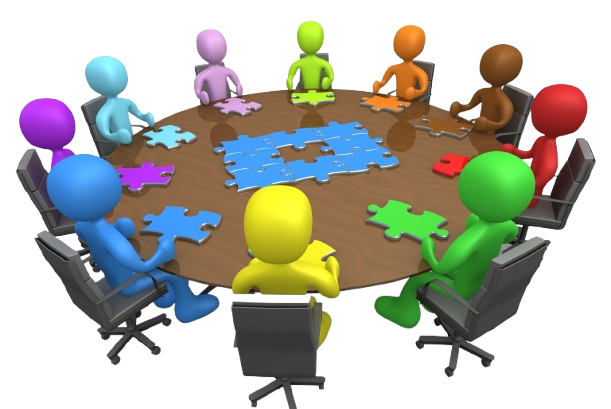
Which feature of collective responsibility of the Cabinet is depicted in the picture given below?

All the ministers must function as a team and discuss policies.
Reason — The given picture shows all ministers sitting together around a table, arranging puzzle pieces, which represents teamwork, unity, and joint policy discussions.
How many elected members are there in the Rajya Sabha?
238
Reason — The maximum strength of the Rajya Sabha can be 250 members. Of these, 238 are elected by the States of the Union and 12 members are nominated by the President.
Choose the correct option with regard to an Ordinance.
It must be approved within six weeks of re-assembly of Parliament.
Reason — If the Parliament does not approve the Ordinance within six months of its re-assembly, it lapses. If an ordinance is not disapproved, it will automatically cease to operate at the end of six weeks from the date the Parliament re-assembles.
Read the statements given below and select the option that shows the correct relationship between (A) and (R).
Assertion (A): The Congress accepted the Mountbatten Plan.
Reason (R): The only alternate to Partition was a Federation with a weak centre.
(R) is the reason for (A).
Explanation — The Congress leaders realised that its better to have a smaller India with strong centre rather than having a big India with weak centre, due to internal conflicts.
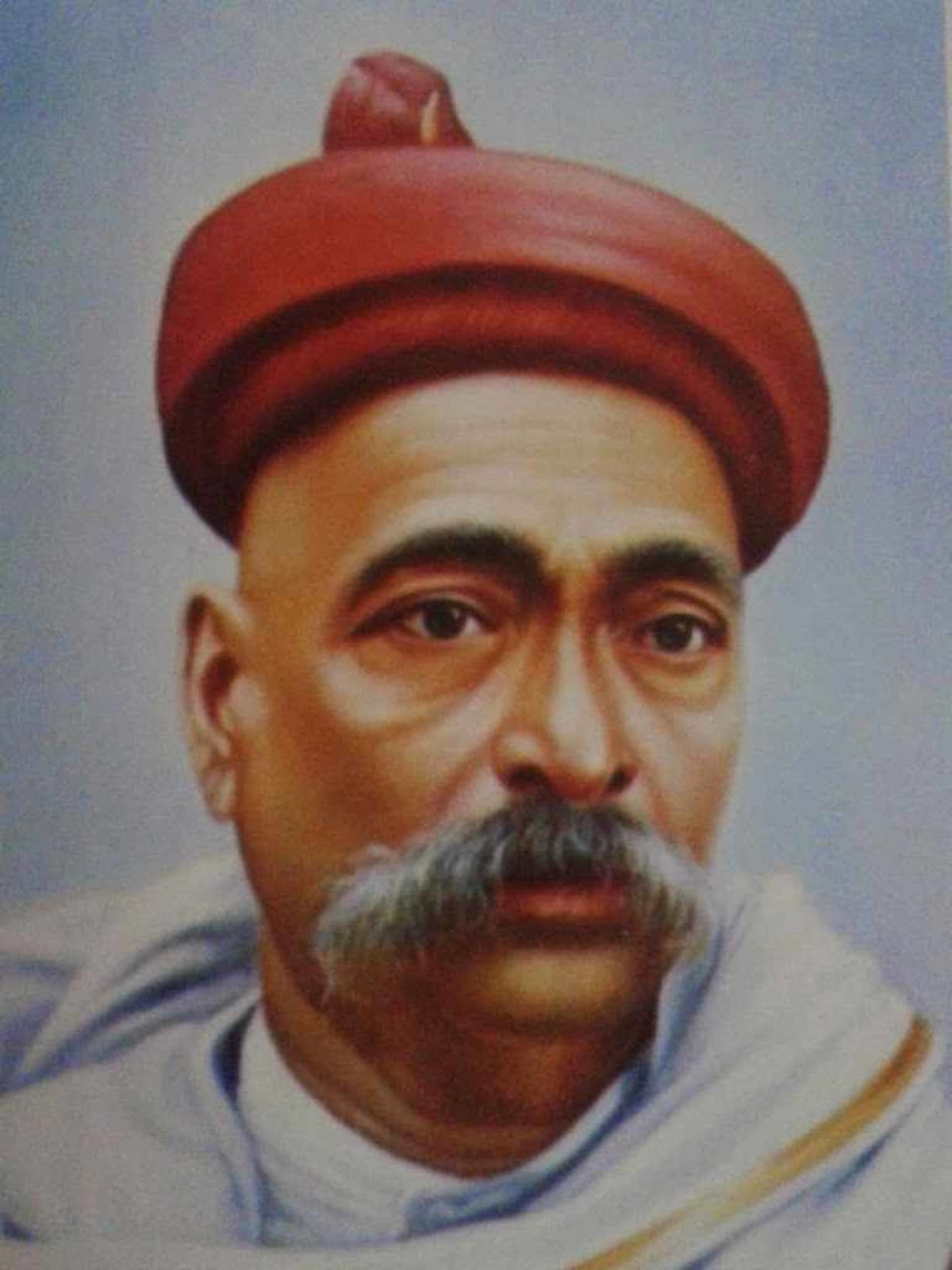
Identify the leader in the given picture:

Bal Gangadhar Tilak
Reason — The given picture shows Bal Gangadhar Tilak, an assertive nationalist leader.
Anita wants to do a project on the Governor General who introduced the Subsidiary Alliance. Who among the following will she choose?
Lord Wellesley
Reason — The policy of Subsidiary Alliance was introduced by Lord Wellesley.
From the given descriptions of the Cold War, choose the odd one out.
Two countries joined hands to fight Britain and France.
Reason — The Cold War was a period of ideological and political tension between the U.S. and the Soviet Union, but there was no direct military conflict. Instead, it involved proxy wars, nuclear arms race, and diplomatic struggles.
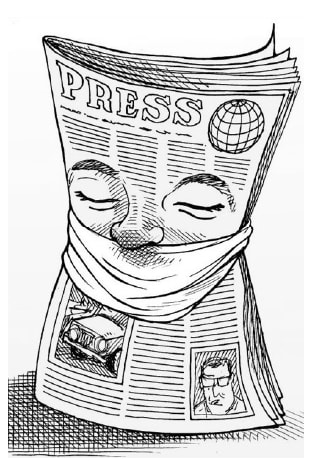
Which repressive policy of Lord Lytton is this picture associated with?

The Vernacular Press Act
Reason — The Vernacular Press Act, enacted in 1878, forbade vernacular papers to publish any material that might incite feelings of dissatisfaction against the British Government. This act was not applicable to English newspapers.
Which of the following countries suffered due to the atom bomb during World War II?
Japan
Reason — The USA dropped atom bombs on the Japanese cities of Hiroshima and Nagasaki when they refused to surrender in August, 1945.
Which of the following statements about the composition of the General Assembly is NOT true?
Permanent members have the Veto Power.
Reason — Veto power refers to the Security Council, not the General Assembly. The five permanent members of the Security Council (China, France, Russia, the United Kingdom, and the United States) do have veto power over substantive decisions.
Identify the Early Nationalists Leaders
P: Dadabhai Naoroji
Q: Bipin Chandra Pal
R: Surendranath Banerjee
S: Aurobindo Ghosh
P & R
Reason — The Early Nationalists are Dadabhai Naoroji and Surendranath Banerjee, while Bipin Chandra Pal and Aurobindo Ghosh are Assertive nationalists.
Which of the following has influenced the objectives of the Non-Aligned Movement?
The Panchsheel
Reason — The Panchsheel or the five principles of peaceful co-existence formed the basis of the Bandung Conference of 1955 and were a great contribution to the development of the NAM, thus shaping its objectives. NATO, SEATO and the Warsaw Pact were military alliances formed by the two power blocs.
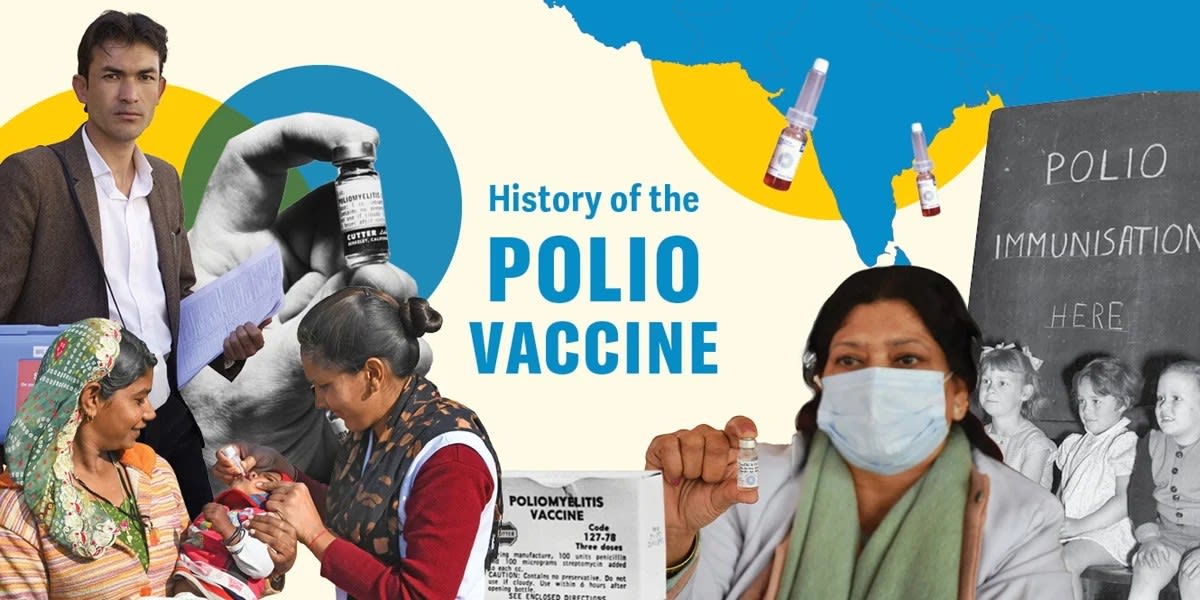
Which agency of the United Nations Organisation is connected to this picture?

WHO
Reason — The picture is connected with polio vaccination. WHO makes a worldwide campaign in providing effective immunisation for all children to prevent six major communicable diseases of childhood, poliomyelitis being one of them.
Mention any two powers of the Prime Minister with reference to the President.
Two powers of the Prime Minister with reference to the President are:
Imagine you are a young member of the Forward Bloc, how would you and your party work towards establishing a socialist state?
Me and my party would work for the establishment of a Socialist State through:
Mention any two points to highlight the significance of the Lucknow Pact.
Two points highlighting the significance of the Lucknow Pact are:
Mention any two methods of the Early Nationalists.
Two methods of the Early Nationalists were:
Name any two countries of the Triple Entente.
Two countries of the Triple Entente were — France and Russia.
Name any two objectives of the Non-Aligned Movement.
Two objectives of NAM are as follows:
In India, the Supreme Court can exercise advisory jurisdiction under Article 143 of the Constitution. With regard to the President, these opinions are purely advisory.
Mention any two points about the Supreme Court that you can deduce from the passage.
In India, the Supreme Court can exercise advisory jurisdiction under Article 143 of the Constitution. This means that:
India has a parliamentary system of governance. With reference to the Indian Parliament, answer the following questions:
(i) State any three ways in which the legislature controls the executive.
(ii) How and by whom is the Speaker of the Lok Sabha elected?
(iii) Mention any four financial powers of the Parliament.
(i) Three ways in which the Legislature controls the Executive are:
Interpellation: The Question Hour, Calling Attention Notices and Half-an-Hour Discussion are some of the devices to seek information from the government about its policies and performance.
For example - The first hour of a sitting in both Houses is allotted for asking and answering of questions related to matters of public importance or to highlight a grievance. It is a valuable device against injustice and slackness of the government.
Vote of No-confidence: If a Government acts against the Constitutional provisions, it can be voted out of office by passing a vote of no-confidence against the Prime Minister, or the Ministry as a whole or any of its members. In such a case, the whole Ministry has to resign.
Monetary Controls: During the budget session a cut motion may be moved. Parliamentary Committee on Public Accounts ensures that public money is spent in accordance with Parliament's decision. It examines reports of the Comptroller and Auditor-General of India.
(ii) The Speaker of the Lok Sabha is elected from among its own members soon after the newly elected House meets for the first time. The previous Speaker does not vacate his/her office till a new speaker is elected by the new Lok Sabha in its first meeting. The Speaker is elected for a period of five years, and can seek re-election for any number of times, if he/she is elected as a member of the Lok Sabha.
(iii) The Union Parliament has following four financial powers:
The President of India works on the advice of the Prime Minister and his Cabinet. With reference to the Prime Minister, answer the following questions:
(i) Mention any three qualifications required for a person to be elected as the President of India.
(ii) Mention any three types of emergencies that can be declared by the President.
(iii) Mention any four legislative powers of the President.
(i) A person shall be eligible for election as Vice-President, if he -
(ii) Three types of emergencies that can be declared by the President are:
(iii) Four legislative powers of the President are-
The High Courts and Subordinate Courts are part of the integrated judicial system. With reference to the statement, answer the following questions:
(i) Mention three cases which fall under the Original Jurisdiction of the High Court.
(ii) Who appoints the High Court Judges? Mention any two qualifications required for a person to be appointed as a High Court Judge.
(iii) (a) How do Lok Adalats help the Superior Courts?
(b) Name any three writs issued by the High Court.
(i) High Courts have original jurisdiction, that is, the power to hear and decide cases at the first instance. It has original jurisdiction in the following cases:
(ii) The President appoints the High Court Judges in consultation with the Chief Justice of India, the Governor of the State and the Chief Justice of the High Court.
According to the Constitution, a person shall be qualified for appointment as a Judge of a High Court under the following conditions:
(iii) (a) The Lok Adalats reduce the workload of other courts enabling them to deal with more serious matters. This reduces delays in higher courts. They provide fast and inexpensive justice and helps in reducing the huge backlog of the higher courts.
(b) Three writs issued by the High Court are:
Read the excerpt given below and answer the questions that follow:
The Indian Rebellion of 1857, also known as the Indian Mutiny, the Sepoy Mutiny, or the First War of Indian Independence, was a widespread uprising against British rule in India that began in May 1857. The rebellion was sparked by the sepoys' mutiny in Meerut on May 10, 1857, and quickly spread to other parts of India. On May 10, 1857, Indian soldiers, known as sepoys, rebelled against their British officers in the town of Meerut, triggering a rebellion. The rebellion quickly spread to other parts of India with many Indian princes and soldiers joining the uprising.
— [Edited] TIMESOFINDIA.COM / May 10, 2023
(i) What was the immediate cause for the rebellion?
(ii) Mention any three political causes of the Revolt.
(iii) Mention any four changes made in the army after the Revolt.
(i) The immediate cause of the First War of Independence was the introduction of the Enfield rifle. The loading process of the Enfield rifle involved bringing the cartridge to the mouth and biting off the top greased paper with the teeth.
In January 1857, there was a rumour in the Bengal regiments that the greased cartridge had the fat of cow or pig. The sepoys were now convinced that the introduction of greased cartridges was a deliberate move to defile Hindu and Muslim religions. So, the soldiers refused to use these cartridges and staged an uprising when they were forced to use them.
(ii) Three political causes of the First War of Independence were —
Other Indian rulers, who were not adversely affected, also became suspicious of their future.
(iii) The India army was reorganised after 1858, to prevent the reoccurrence of another uprising, in the following manner:
The First War of Independence led to the growth of Nationalism in India. With reference to this, answer the following questions:
(i) Who was the founder of Congress? Mention any two organisations which were precursors to the Congress.
(ii) Mention any three objectives of the Congress.
(iii) Mention any two contributions each of:
(a) Jyotiba Phule
(b) Raja Ram Mohan Roy
(i) The Indian National Congress (INC) was founded by Allan Octavian Hume in 1885. Two organisations which were precursors to the Congress are:
(ii) Three objectives of the Indian National Congress are:
(iii) (a) Two contributions of Jyotiba Phule are:
(b) Two contributions of Raja Ram Mohan Roy are:
Mahatma Gandhi launched three major movements in his fight against the British. With reference to the Gandhian Movements answer the following:
(i) Mention any three causes of the Non-cooperation Movement.
(ii) What were the causes of the Civil Disobedience Movement? Which march marked the beginning of this movement?
(iii) The Gandhi Irwin Pact was an attempt to end political tensions in India. Mention any four clauses of this Pact to justify this statement.
(i) There were three main reasons behind the Non-cooperation movement:
Gandhiji appealed to the Viceroy to withhold his consent to the Rowlatt Act. However his appeal was ignored. He started 'Satyagraha' as a challenge to the government.
Jallianwala Bagh Tragedy: Jallianwala Bagh Tragedy happened in Amritsar on April 13, 1919. On that day, peaceful gathering had assembled at Jallianwala Bagh to protest against the Rowlatt Act. Without any warning, General Dyer ordered his troops to open fire on the unarmed crowd, resulting in hundreds of deaths and thousands of injuries. It was made clear to the Indians that the British had no intention of parting with political power or sharing it with Indians.
Khilafat Movement: In the First World War Turkey was defeated and the Sultan of Turkey, who was the Caliph was deprived of all authority. The Muslim population in India started a powerful agitation known as the Khilafat Movement, under the leadership of the Ali Brothers. 'Khilafat Day' was observed on October 17, 1919 on an all-India scale. Gandhiji took the chance to unite Hindus and Muslims. Mahatma Gandhi was elected as President of the All-India Khilafat Conference in November 1919. He advised the Khilafat Committee to adopt a policy of Non-Cooperation with the Government.
(ii) The causes of the Civil Disobedience Movement are given below:
On 12th March, Mahatma Gandhi began the historic march from Sabarmati Ashram to Dandi, a village on the Gujarat sea coast to break the Salt law. This Dandi March marked the beginning of this movement.
(iii) The Gandi-Irwin Pact was signed by Gandhiji and Lord Irwin, the then Viceroy, in March 1931. Four clauses of this Pact are:
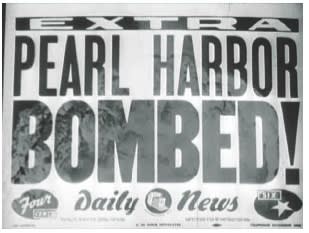
Look at the picture given below and answer the questions that follow:
(i) Which country was responsible for the bombing? Mention any two consequences of the World War associated with this incident.
(ii) Explain the Policy of Appeasement which led to the Second World War.
(iii) The unfair Treaty of Versailles led to the rise of dictatorship in Germany. Mention any four clauses of this treaty to support this statement.
(i) Japan was responsible for the ariel attacks on the Pearl Harbor on December 7, 1941. Two consequences associated with this incident are:
(ii) Appeasement meant accepting the hostile demands of an aggressive nation to gain peace.
(iii) The unfair Treaty of Versailles led to the rise of dictatorship in Germany. Four clauses of the Treaty of Versailles are:
The United Nations maintains international peace and security. With reference to its organs and agencies, answer the following questions:
(i) What is the composition of the Security Council?
(ii) Mention any three functions of the International Court of Justice.
(iii) Mention any four functions of the WHO.
(i) The Security Council consists of 15 members.
(ii) Three functions of the International Court of Justice are:
(iii) Four functions of WHO are as follows:
Press ↓ to reveal a solution and move to the next question. Browse the free sample bank.