Irrigation in India is indispensable for sustained agricultural development because of
(a)ever increasing demand of food crops
(b)India experiences tropical monsoon climate which is unevenly distributed, unreliable and erratic in nature
(c)There is a large variety of crops grown in India
(d)Scarcity of rainfall
Show SolutionHide Solution↓
India experiences tropical monsoon climate which is unevenly distributed, unreliable and erratic in nature
21 Mark · Multiple Choice Questions
The perennial canals can be built in the areas of
(a)uneven terrain
(b)low level relief with deep fertile soil
(c)in the deltaic regions
(d)in the mountainous relief
Show SolutionHide Solution↓
low level relief with deep fertile soil
31 Mark · Multiple Choice Questions
A tank can be constructed in the area of
(a)undulating relief
(b)underlying hard rocks
(c)natural depressions
(d)all the above
Show SolutionHide Solution↓
all the above
41 Mark · Multiple Choice Questions
The tank irrigation is practiced mostly in
(a)Punjab
(b)Uttarakhand
(c)Haryana
(d)Tamil Nadu
Show SolutionHide Solution↓
Tamil Nadu
51 Mark · Multiple Choice Questions
A tube well is a
(a)borewell
(b)pond
(c)lake
(d)surface well
Show SolutionHide Solution↓
borewell
61 Mark · Multiple Choice Questions
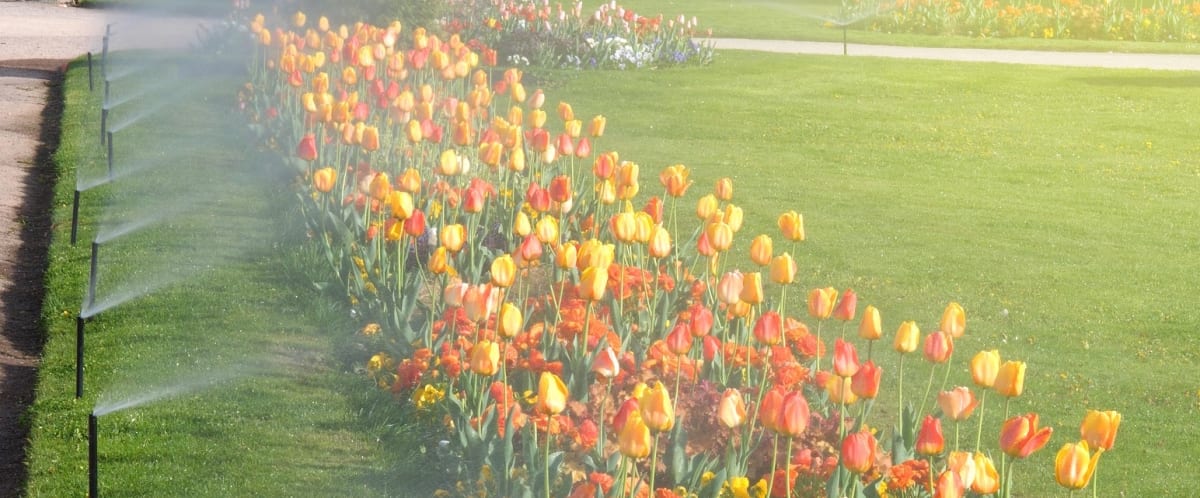
The given type of modern irrigation is useful for arid region
(a)bamboo irrigation
(b)tube well irrigation
(c)drip irrigation
(d)sprinkler irrigation
Show SolutionHide Solution↓
sprinkler irrigation
71 Mark · Multiple Choice Questions
Irrigation by canals is more suitable in Northern India because
(a)it is cheap
(b)it irrigates larger area
(c)the surface of the northern plain is flat with soft soil
(d)it is perennial
Show SolutionHide Solution↓
the surface of the northern plain is flat with soft soil
81 Mark · Multiple Choice Questions
Canal irrigation leads to the ground around it becoming unproductive because
(a)due to waterlogging the capacity of the soil to absorb water decreases and the water which collects can ruin the crop
(b)percolation of water through canal can lead to swamps
(c)problem of salt effervescence due to over-flooding of the fields make the soil unsuitable for farming
(d)all the above
Show SolutionHide Solution↓
all the above
91 Mark · Multiple Choice Questions
Rainwater harvesting is useful for
(a)industrial use
(b)recharging ground water
(c)domestic use
(d)agriculture
Show SolutionHide Solution↓
recharging ground water
101 Mark · Multiple Choice Questions
Connect the correct pairs.
S. No.
Column A
Column B
1.
paar
Maharashtra
2.
kere
Assam
3.
tal
Karnataka
4.
dongs
Western Rajasthan
Show SolutionHide Solution↓
S. No.
Column A
Column B
1.
paar
Western Rajasthan
2.
kere
Karnataka
3.
tal
Maharashtra
4.
dongs
Assam
1Answer the following
What is irrigation?
Show SolutionHide Solution↓
The process of artificial application of water from canals, wells, tube wells, lakes etc.; to the soil for growing crops is called irrigation.
2Answer the following
Why is irrigation necessary for a country like India?
Show SolutionHide Solution↓
Irrigation is necessary for a country like India because of following reasons:
Monsoon is seasonal and rainfall is erratic, sporadic and unevenly distributed.
Irrigation is required to grow crops throughout the year as rainfall is seasonal.
Some crops like paddy, sugarcane and jute need more water which has to be supplied through irrigation.
Commercialization of agriculture and the pressure of growing population.
With proper irrigation, some crops like rice and wheat can have two growing seasons in a year.
3Answer the following
State the different methods of irrigation.
Show SolutionHide Solution↓
The different methods of irrigation are classified into two groups:
Primitive Methods
Canal irrigation
Tank irrigation
Wells
Modern Methods
Sprinkler Irrigation
Drip Irrigation
Bamboo Irrigation
4Answer the following
Of the two types of canal irrigation, which do you think is better? Why?
Show SolutionHide Solution↓
The two types of canal irrigation are Inundation canal and Perennial canal. Out of these, Perennial canal is better because it provides water throughout the year while Inundation canal provides water only at the time of floods.
5Answer the following
What is tank irrigation?
Show SolutionHide Solution↓
Tank irrigation refers to irrigation in which water stored in artificially constructed tanks is used for irrigation. Tanks are constructed in areas of natural depression by building earthen embankments or masonry walls to collect water.
6Answer the following
What are the advantages and disadvantages of tank irrigation?
Show SolutionHide Solution↓
Advantages of tank irrigation are:
Tank irrigation is cheaper and is prevalent in Deccan plateau where natural pits and depressions are found.
As the water is collected and used in dry season, it uses the water table of the surrounding region.
It is difficult to build canals in the Deccan plateau regions.
The tank water is used for domestic purposes in villages.
In the absence of perennial rivers and canals, tanks provide a source of water during the dry season.
Disadvantages of tank irrigation are:
Since tanks are shallow, large amount of water is wasted through evaporation.
Tanks are non-perennial and dry up in summer. Considering this and the large area they occupy, they become costly in comparison to wells and tube wells.
Tanks use up large areas of land which could be used for agriculture.
7Answer the following
Where are tanks most widely used and why?
Show SolutionHide Solution↓
Tanks are most widely used in peninsular India because natural pits and depressions are easily available in this area and the rocky base of tanks does not allow wastage of water due to percolation.
8Answer the following
Of the two types of wells, which is the best and why?
Show SolutionHide Solution↓
Of the two types of wells, tube wells are are best because they can irrigate larger area and they occupy less area as compared to surface wells. They are also helpful in drought affected areas.
9Answer the following
Name two states where tank irrigation and well irrigation is practised.
Show SolutionHide Solution↓
Andhra Pradesh and Telangana are two states where tank irrigation and well irrigation is practised.
10Answer the following
Name two methods of drawing water from the well.
Show SolutionHide Solution↓
Two methods of drawing water from the well are Persian wheel or Rehat and Moat.
11Answer the following
Despite big river projects, irrigation through groundwater has still been growing in popularity. Why is this?
Show SolutionHide Solution↓
Despite big river projects, irrigation through groundwater has still been growing in popularity because of following reasons:
Irrigation projects are still not available in many remote areas of India whereas ground water is available in most parts.
It is easy and cheap to harvest ground water.
The erratic and variable rainfall has made ground water more popular.
12Answer the following
For an Indian farmer state two advantages that well irrigation has over canal irrigation.
Show SolutionHide Solution↓
Two advantages that well irrigation has over canal irrigation for an Indian farmer are:
Well is simplest and cheapest source of irrigation and the poor Indian farmer can easily afford it.
Well is an independent source of irrigation and can be used as and when the necessity arises. Canal irrigation, on the other hand, is controlled by other agencies and cannot be used at will.
13Answer the following
What is the difference between surface water resource and groundwater resource? State two advantages of each.
Show SolutionHide Solution↓
S. No.
Surface water resource
Groundwater resource
1.
Surface water is available on the surface of earth in the form of rivers, lakes, ponds and canals.
Groundwater is the part of rainwater that seeps into the ground through the cracks and crevices.
2.
Surface water resources are mostly seasonal.
Ground water is available throughout the year and is recharged every monsoon.
3.
Can be used directly
Requires pumping
4.
Usually contaminated
Usually fit for drinking
Advantages of Surface water resource:
The surface water is easily available for drinking and irrigation.
The surface water is used for thermoelectric power.
Advantages of Groundwater resource:
The ground water is reliable source of water for drinking.
It is not wasted by evaporation.
14Answer the following
Name two important canal systems each in Uttar Pradesh and Punjab.
Show SolutionHide Solution↓
Canal system in Uttar Pradesh are:
Ganga canal
East Yamuna canal
Canal system in Punjab are:
Sirhind Canal
Makhu Canal
15Answer the following
Irrigation in India faces many problems. State any two such problems.
Show SolutionHide Solution↓
Two problems faced by India regarding irrigation are:
The rainfall is highly uneven and is mostly received in four months. Most of the rivers are seasonal.
The irrigation projects are still not available in most of the parts of India.
16Answer the following
Differentiate between inundation canal and perennial canal.
Show SolutionHide Solution↓
S. No.
Inundation canal
Perennial canal
1.
Inundation canals are taken out from the rivers without any regulating systems like weirs and barrages.
Perennial canals are taken out from the rivers with regulating system.
2.
Inundation canals are useful only during floods.
Perennial canals supply water throughout the year.
3.
They are easy and cheap to built.
They are expensive to construct.
17Answer the following
Give two reasons why inundation canals are being converted to perennial canals.
Show SolutionHide Solution↓
Inundation canals are being converted to perennial canals because:
With Inundation canals, there is uncertainty of water supply. They are useful only during floods.
Only low-land areas can be irrigated.
18Answer the following
Give two reasons why tube well irrigation is more important in northern India than in southern India.
Show SolutionHide Solution↓
Tube well irrigation is more important in northern India than in southern India because:
The land in southern India is rocky while the land in norther India is softer, which makes it easy and cheap to dig tube wells.
The southern India has other water sources like sea, tanks, ordinary wells etc.
19Answer the following
Give two reasons why tank irrigation is more popular in southern India.
Show SolutionHide Solution↓
Tank irrigation is more popular in southern India because of following two reasons:
Most of the area of peninsular India is uneven with many natural depressions where the tanks can be built.
The Deccan plateau consists of underlying hard rocks which are impervious or non-porous. These rocks do not allow the water to seep through.
20Answer the following
Name two states which suffer periodically from droughts. Give a reason for your answer.
Show SolutionHide Solution↓
Two states which suffer periodically from drought are Rajasthan and Gujarat. Rajasthan and Gujarat receive scanty rainfall because the monsoon winds have very less moisture left by the time they reach there. Also, the position of Aravalis direct the winds towards punjab.
21Answer the following
State the objectives of National Water Policy.
Show SolutionHide Solution↓
The objectives of National Water Policy are:
To analyze the existing situation of water
To propose a framework for creation of a system of laws and institutions for water management
To recycle and treat waste water
22Answer the following
What is meant by the term Rainwater Harvesting?
Show SolutionHide Solution↓
The activity of collecting rainwater directly or recharging it into the ground to improve groundwater storage in the aquifer is called Rainwater Harvesting.
23Answer the following
Why is it necessary to conserve water?
Show SolutionHide Solution↓
It is necessary to conserve water because
There is uncertainty in rainfall and distribution of water is uneven.
There is over-exploitation and excessive use of water.
Contamination of water due to pollution, use of pesticides and fertilizer.
There is scarcity of water due to large and growing population.
Increasing industrialization and rapid urbanization is exerting pressure on water resources.
24Answer the following
How is rainwater harvesting done? Explain.
Show SolutionHide Solution↓
Rainwater harvesting is done by
Storing rainwater and later using it in dry season - Harvesting of rainwater is done by storing it in tanks, ponds and Dams. The stored water is used directly for irrigation and other domestic purposes.
Recharging of groundwater - It is done by Rooftop rainwater Harvesting Method. Rainwater can be collected over the rooftops and can be channelized through small PVC pipes into the underground pits, sump, wells or borewells.
25Answer the following
State the advantages of rooftop rainwater harvesting.
Show SolutionHide Solution↓
The advantages of rooftop rainwater harvesting are:
Utilization of rainwater to its maximum
Easy and cost effective technique
Recharges groundwater
Avoids wastage of water due to run off
26Answer the following
Name the state where rainwater harvesting is commonly practised.
Show SolutionHide Solution↓
Tamil Nadu and Andhra Pradesh.
27Answer the following
Give geographical reasons —
(a)River Damodar is called "river of sorrow".
(b)Irrigation by canals is more suitable in northern India as compared to the south.
(c)Tank irrigation is used in peninsular India.
Show SolutionHide Solution↓
River Damodar was earlier called "river of sorrow" because of its ravaging floods in the plains of West Bengal which caused heavy losses and destruction. With the construction of several dams the floods of Damodar river have been greatly reduced but even now the floods sometimes affect the lower Damodar Valley.
Canal irrigation is more suitable in northern India as compared to the south because the northern rivers are perennial and can supply water to canals throughout the year but the rivers of south India are seasonal and therefore, canals are of no use in dry season.
The peninsular India has natural depressions which act as natural tanks and the rocky surface does not allow percolation of water. Therefore, tank irrigation is used in peninsular India.
28Answer the following
Answer in one word —
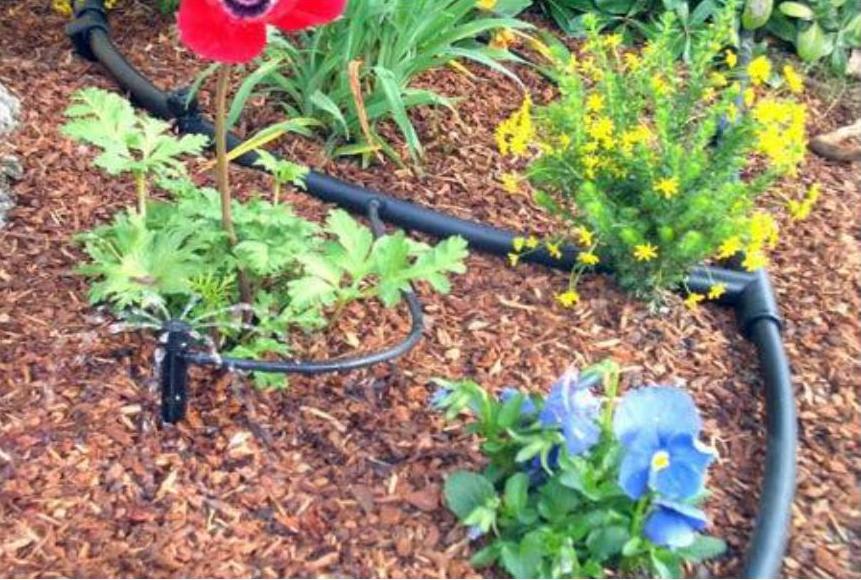
(a)A plastic tube which has small holes through which water keeps on dripping
(b)An ancient irrigation system in North East part of India.
(c)Tube-wells are used extensively in UP and Bihar and are very popular
Show SolutionHide Solution↓
Drip irrigation
Bamboo irrigation
Borewell
29Answer the following
State the advantages and disadvantages of Sprinkler Irrigation.
Show SolutionHide Solution↓
Advantages of Sprinkler Irrigation are:
This type of irrigation does not involve any wastage of water by seepage or evaporation as water is supplied through pipes and not exposed to the sun.
This is the best method for conservation of water.
It is best suited for arid and semi-arid regions.
Water management is easier than surface irrigation system.
Higher application efficiency.
Frequent application is possible.
Does not interfere with the cultivation.
Easy mechanization and automation.
Chemical and fertilizer application can easily be used with sprinkler system.
Disadvantages of Sprinkler Irrigation:
High initial cost.
High operating cost.
Water application efficiency under sprinkler irrigation is strongly affected by direction of the wind.
Some crops are sensitive and may suffer leaf scorch because of salt deposited on the leaves after the water evaporates.
High maintenance requirements as constant and meticulous maintenance of sprinkler system is very important.
Saline water may cause problems.
Water must be free from sand debris and salt.
30Answer the following
Name the modern methods of Irrigation.
Show SolutionHide Solution↓
The modern methods of Irrigation are
Sprinkler Irrigation
Drip Irrigation
Bamboo Irrigation
31Answer the following
Study the picture and answer the questions that follows :
(a)Name the type of irrigation.
(b)What are the advantages of this type of irrigation?
Show SolutionHide Solution↓
Drip Irrigation
Advantages of Drip Irrigation are:
Fertilizer and nutrient loss is minimized due to localized and reduced leaching.
Water application efficiency is high if managed correctly.
Field levelling is not necessary.
Recycled or non-potable water can easily be used.
Moisture within the root zone can be maintained at field capacity.
Soil erosion is less.
Water distribution is highly uniform.
Labour cost is less.
Variation in supply can be regulated by regulating the valves and drippers.
Fertilization can be included with minimum waste of fertilizers.
Usually operated at low pressure thereby reducing energy costs.