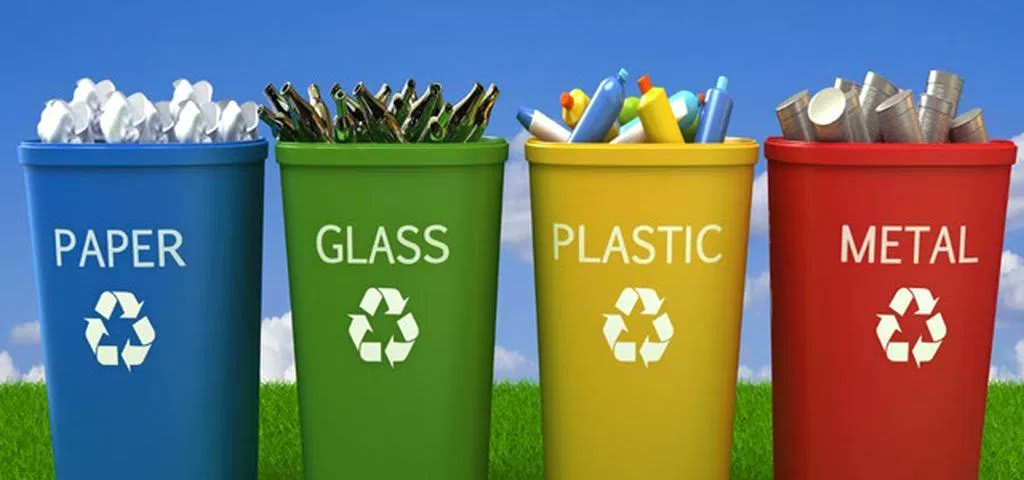
Refer to the image & answer the question that follows.
Which of the following waste management processes is practised here?
(a)Dumping
(b)Segregation
(c)Composting
(d)Landfill
Show SolutionHide Solution↓
Segregation
21 Mark · Multiple Choice Questions
This is the process which involves the deposition of waste on or in the ground and covered them with earth in the large area on the outskirts of the cities.
(a)Segregation
(b)Composting
(c)Vermicomposting
(d)Landfill
Show SolutionHide Solution↓
Landfill
31 Mark · Multiple Choice Questions
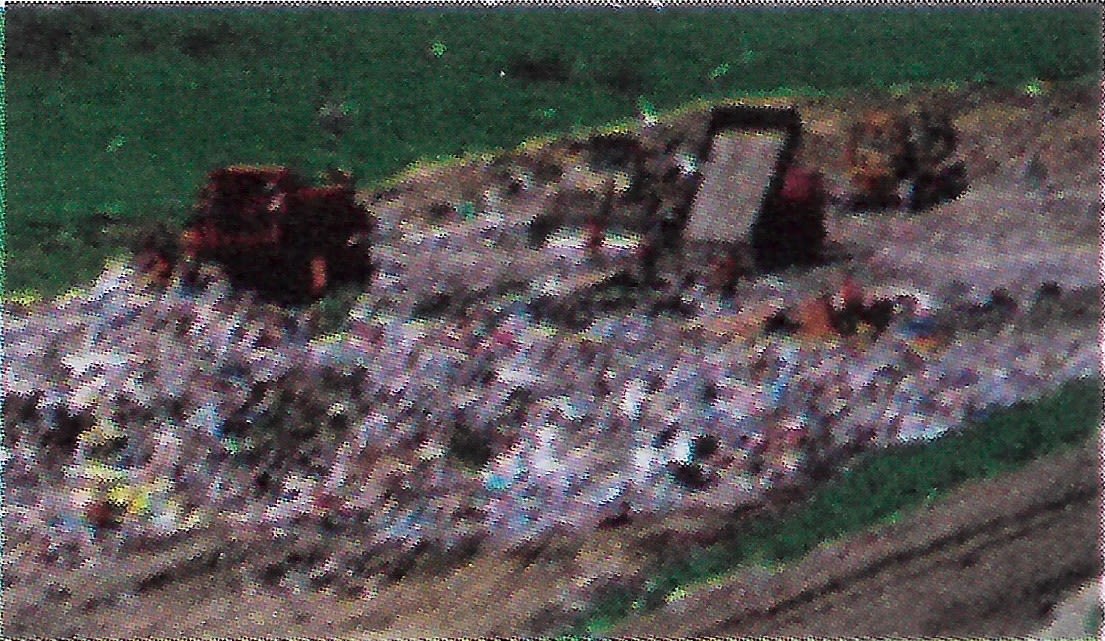
Refer to the image & answer the question that follows.
Which of the following waste management processes is practised here?
(a)Fermentation
(b)Segregation
(c)Composting
(d)Landfill
Show SolutionHide Solution↓
Landfill
41 Mark · Multiple Choice Questions
Most of the garbage of Delhi is recycled in Timarpur plant to generate
(a)Biogas
(b)Fertilizer
(c)Cooking gas & electricity
(d)All of above
Show SolutionHide Solution↓
Cooking gas & electricity
51 Mark · Multiple Choice Questions
According to you which of the following is the best suitable site for landfill?
(a)Centre of the city
(b)Garbage beside each house
(c)Large area away from the city
(d)All the above
Show SolutionHide Solution↓
Large area away from the city
61 Mark · Multiple Choice Questions
Which of the following statements related to composting is not correct?
(a)Composting involves decomposition of both organic & inorganic wastes.
(b)Earthworms play a significant role in composting.
(c)Composting involves decomposition of organic waste into humus.
(d)Both (b) & (c).
Show SolutionHide Solution↓
Composting involves decomposition of both organic & inorganic wastes
71 Mark · Multiple Choice Questions
Which of the following set of microorganisms is involved in the process of composting?
(a)Algae, Viruses
(b)Protozoa, algae
(c)Helminths, archaea
(d)Bacteria, fungi, actinomycetes
Show SolutionHide Solution↓
Bacteria, fungi, actinomycetes
81 Mark · Multiple Choice Questions
Which of the following is/are not the advantages of composting?
(a)Reduction in the quantity of waste
(b)Conversion of organic waste into valuable fertilizer
(c)Aerobic composting is relatively expensive & emits bad odours.
(d)Both (a) & (b)
Show SolutionHide Solution↓
Aerobic composting is relatively expensive & emits bad odours.
1Answer the following questions
Why is it necessary to segregate waste at source?
Show SolutionHide Solution↓
It is necessary to segregate waste at source because:
Biomedical waste and industrial waste must not be mixed with municipal solid waste consisting of biodegradable garbage as disposal of different garbage is done differently.
Waste must be segregated into vegetable/fruits, leaves and garden waste, glass and paper waste at source. The toxic or non-biodegradable chemicals and e-waste must be treated separately.
Waste must not be left in open but kept in closed containers for municipal collection.
2Answer the following questions
What precautions should be observed while collecting the waste?
Show SolutionHide Solution↓
Precautions that should be observed while collecting the waste are:
Collection of waste must be organised area-wise by covered trucks, vans or rickshaws so as to prevent littering on the roads.
Day to day collection is very important to prevent spread of diseases contaminating and polluting the environment.
Building material, debris and demolition waste must be separately collected and disposed off appropriately.
3Answer the following questions
Why should the waste bins be kept covered?
Show SolutionHide Solution↓
The waste bins should be kept covered so that it is not exposed to atmosphere, stray cattle and flies. Thus, it helps to avoid spread of diseases. Littering can also be avoided by using covered waste bins.
4Answer the following questions
Why should manual handling of waste be avoided?
Show SolutionHide Solution↓
The waste contains many infectious germs and toxic materials. Manual handling of waste should be avoided so as to prevent people from exposure to dreadful diseases and infections.
5Answer the following questions
How is waste transferred? What happens if the vehicles used for transporting waste are not covered?
Show SolutionHide Solution↓
Waste is transferred by vehicles like trucks. Vehicles used for transfer or transportation of waste must be specially designed for waste collection. It should be covered because if the vehicles used for transporting waste are not covered they will spread pollution in environment and litter on the roads.
6Answer the following questions
What are landfills? What factors must be kept in mind while planning a landfill?
Show SolutionHide Solution↓
Landfills are the large area on the outskirts of cities where the waste is deposited on or in the ground and covered with earth.
Following factors must be kept in mind while planning a landfill:
Land requirement and its cost — the land selected for landfill must depend on the quality and quantity of solid waste.
Accessibility — the site of disposal must be located either centrally or near the source of waste generated.
Cover — A sanitary landfill requires atleast 15 cm cover of thick compact soil at the end of each day's work.
Climate — the frequency of rainfall, the velocity and direction of prevailing wind and overall temperature-time relationship are factors to be considered.
7Answer the following questions
State the problems associated with landfills.
Show SolutionHide Solution↓
The problems associated with landfills are:
Landfills give out a bad odour and affects people living or working nearby.
Landfills can contaminate the surrounding water supplies, aquifers and soil by leachate.
Landfills create explosive methane gas during the decomposition of waste by bacteria, which can damage plants by leaking into the surrounding soil.
8Answer the following questions
What is a leachate? Why is it harmful for soil and water?
Show SolutionHide Solution↓
Leachate is formed when rain water leaks into the landfill. As the water percolates through the landfill, chemical processes turn it acidic. This acidic water then dissolves toxic chemicals from common hazardous waste products such as household cleaners, insect sprays and paints. This resulting toxic leachate leaks through the bottom and sides of the landfill and contaminates water and soil.
9Answer the following questions
What is meant by composting?
Show SolutionHide Solution↓
Composting is defined as the process of decomposition of organic waste into humus. It is the natural process of recycling organic matter, such as leaves and food scraps, into valuable fertilizers that can enrich soil.
10Answer the following questions
Explain the process of composting in brief.
Show SolutionHide Solution↓
There are two ways of composting:
Anaerobic composting — The anaerobic decomposition process occurs without oxygen and produces biogas (methane and carbon dioxide) and compost. This process is less prone to odour and doesn't require aeration. The biogas can be used for energy production and the compost is used as a superior soil conditioner.
Aerobic composting — Aerobic decomposition occurs in the presence of oxygen and involves bacteria, fungi, and actinomycetes. It is relatively expensive, produces bad odours, requires aeration, uses additives, and produces greenhouse gases. The micro-organisms in the process grow and break down sugars, starch, and organic acids.
11Answer the following questions
State any three advantages of composting.
Show SolutionHide Solution↓
Three advantages of composting are:
Conversion of organic waste into valuable fertilizers.
Reduction of the quantity of waste to be disposed by householder.
Recycling of organic materials and nutrients back into the soil.