This state has the largest reserves of magnetite and haematite
(a)Odisha
(b)Rajasthan
(c)Karnataka
(d)Madhya Pradesh
Show SolutionHide Solution↓
Karnataka
51 Mark · Multiple Choice Questions
This is an important mineral for making iron and steel
(a)copper
(b)iron
(c)coal
(d)manganese
Show SolutionHide Solution↓
manganese
61 Mark · Multiple Choice Questions
Manganese is used in the manufacture of
(a)bolts & nails
(b)sponge
(c)iron appliances
(d)ferromanganese
Show SolutionHide Solution↓
ferromanganese
71 Mark · Multiple Choice Questions
This mineral is highly ductile
(a)iron ore
(b)manganese
(c)copper
(d)bauxite
Show SolutionHide Solution↓
copper
81 Mark · Multiple Choice Questions
It is used for making aircrafts, ships and utensils
(a)iron ore
(b)bauxite
(c)copper
(d)none of the above
Show SolutionHide Solution↓
bauxite
91 Mark · Multiple Choice Questions
The highest producer of copper is
(a)Balaghat district in Madhya Pradesh
(b)Khetri in Rajasthan
(c)Hazaribagh in Jharkhand
(d)Salem in Tamil Nadu
Show SolutionHide Solution↓
Balaghat district in Madhya Pradesh
101 Mark · Multiple Choice Questions
The leading producer of manganese is
(a)Sundargarh in Odisha
(b)Chitradurg in Karnataka
(c)Ratnagiri district in Maharashtra
(d)Balaghat district in Madhya Pradesh
Show SolutionHide Solution↓
Sundargarh in Odisha
1Answer the following questions
Name the prominent minerals of India.
Show SolutionHide Solution↓
The prominent minerals of India are Iron ore, manganese, nickle, copper, mica, limestone and gypsum.
2Answer the following questions
Name the state that leads in the production of Iron Ore in India.
Show SolutionHide Solution↓
Odisha is the state that leads in the production of Iron Ore in India.
3Answer the following questions
Name two places in India where Bauxite is found.
Show SolutionHide Solution↓
Two places in India where Bauxite is found are Sundergarh (Odisha) and Palamau (Jharkhand).
4Answer the following questions
State two uses of Bauxite.
Show SolutionHide Solution↓
Two uses of Bauxite are:
Bauxite is the raw material for making aluminium. Aluminium is used for making aircraft, ship and utensils etc.
Bauxite is also used in cement, chemicals, soda cans and dishwashers.
5Answer the following questions
Why is it necessary to conserve mineral resources?
Show SolutionHide Solution↓
It is necessary to conserve mineral resources because they are present on earth in limited quantity and are non-renewable. Their consumption rate is high. Therefore we need to conserve them by stopping their wastage.
6Answer the following questions
Name three states where Iron ore is found in India.
Show SolutionHide Solution↓
Karnataka, Odisha and Chhattisgarh are three states where Iron ore is found in India.
7Answer the following questions
State the uses of Manganese.
Show SolutionHide Solution↓
The uses of Manganese are:
It is the most important mineral for making Iron and steel.
It is used for manufacturing of bleaching powder, insecticides, dry batteries and china clay.
It makes steel strong, removes impurities and makes it immune to rusting.
It is used to create an alloy with aluminium to produce a metal that is resistant to corrosion.
It is used in manufacture of ferromanganese, Silico manganese and Chrome manganese.
In paints, pigments and ceramics.
8Answer the following questions
Why is Manganese important for making iron and steel?
Show SolutionHide Solution↓
Manganese is important for making iron and steel because of the following reasons:
Manganese decreases the brittleness of steel and imparts strength.
Manganese makes steel strong, removes impurities and makes it immune to rusting.
9Answer the following questions
State the main uses of copper.
Show SolutionHide Solution↓
The main uses of copper are:
Copper is used in electrical machinery, automobile industry, stainless steel and telephones.
Copper is used in railway equipment industry and other engineering works.
Copper is used in making alloys such as brass and bronze.
Copper is used for making arms, ammunition and utensils.
10Answer the following questions
Name the states where copper is found.
Show SolutionHide Solution↓
The states where copper is found are Madhya Pradesh, Rajasthan and Jharkhand.
11Answer the following questions
Why is copper important for electrical machinery?
Show SolutionHide Solution↓
Copper is important for electrical machinery because of its high ductility and high thermal and electrical conductivity. It is used to make electrical wires, motors and generators.
11 Mark · Multiple Choice Questions
Conventional energy resources consist of
(a)petroleum
(b)tidal energy
(c)biofuel
(d)wind energy
Show SolutionHide Solution↓
petroleum
21 Mark · Multiple Choice Questions
This is the best quality of coal with 80% carbon
(a)bituminous
(b)lignite
(c)anthracite
(d)peat
Show SolutionHide Solution↓
anthracite
31 Mark · Multiple Choice Questions
Petroleum is
(a)non-inflammable liquid
(b)natural fossil fuel
(c)renewable form of energy resource
(d)none of the above
Show SolutionHide Solution↓
natural fossil fuel
41 Mark · Multiple Choice Questions
Hydel power is a
(a)renewable resource
(b)non-renewable resource
(c)exhaustible resource
(d)very expensive
Show SolutionHide Solution↓
renewable resource
51 Mark · Multiple Choice Questions
Multipurpose projects were installed by Pandit Jawaharlal Nehru to
(a)supply water to cities and for power generation
(b)for navigation
(c)for economic development
(d)to avoid silting in the river
Show SolutionHide Solution↓
supply water to cities and for power generation
61 Mark · Multiple Choice Questions
Hirakud dam was constructed mainly
(a)for irrigation
(b)to control floods
(c)to supply water for domestic use
(d)to store water
Show SolutionHide Solution↓
to control floods
71 Mark · Multiple Choice Questions
The main raw materials for generation of atomic energy
(a)uranium and plutonium
(b)coal and non-ore
(c)manganese and copper
(d)copper and bauxite
Show SolutionHide Solution↓
uranium and plutonium
81 Mark · Multiple Choice Questions
Solar energy is
(a)in-exhaustible
(b)non-renewable
(c)non affordable
(d)more useful in temperate zone
Show SolutionHide Solution↓
in-exhaustible
91 Mark · Multiple Choice Questions
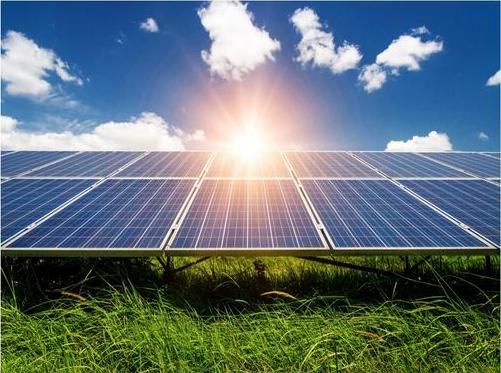
Identify the type of energy used in the given picture
(a)wind energy
(b)solar energy
(c)biomass energy
(d)tidal power
Show SolutionHide Solution↓
Solar energy
101 Mark · Multiple Choice Questions
Largest coal field in India
(a)Digboi
(b)Ranigunj
(c)Jharia
(d)Bombay High
Show SolutionHide Solution↓
Jharia
1Answer the following
How is energy obtained?
Show SolutionHide Solution↓
Energy is obtained from conventional sources like Coal, Petroleum, Natural gas, Hydel power, Thermal power, Nuclear power; and non-conventional energy sources like solar, wind, biogas, tidal, geothermal etc.
2Answer the following
How do we classify energy?
Show SolutionHide Solution↓
The energy can be classified (on the basis of source) as follows:
Conventional energy: These are of following types
Coal
Petroleum
Natural Gas
Hydel power
Thermal power
Nuclear power
Non-conventional energy: These are of following types
Solar
Wind
Biogas
Tidal
Geothermal
3Answer the following
Where is coal got from?
Show SolutionHide Solution↓
Coal is a fossil fuel that is extracted from the ground using mining techniques. The common methods of coal extraction are surface mining and underground mining. Surface mining is used to obtain coal from deposits closer to the earth's surface. Underground mining is used to extract coal that is deep beneath the earth's surface.
4Answer the following
Why is coal often referred to as 'black gold'?
Show SolutionHide Solution↓
Coal is a valuable and abundant natural resource that has played an important role in the economic development of many countries. It has been used to power everything from steam engines to electricity-generating power plants to iron and steel manufacturing plants. To highlight the valuable nature of coal and its impact on society and industry, it is referred to as 'black gold'.
5Answer the following
Write in brief about the origin of coal.
Show SolutionHide Solution↓
Coal is formed from the remains of ancient plants and animals that died millions of years ago and were buried under layers of sediment. Over time, the heat and pressure from the sediment caused the remains to change into different types of coal, such as Anthracite, Bituminous, Lignite and Peat.
6Answer the following
Give the different varieties of coal. Which do you think is the best variety? Why?
Show SolutionHide Solution↓
The different varieties of coal are:
Anthracite
Bituminous
Lignite
Peat
The best variety of coal is Anthracite because it contains 80% carbon and thus provide more energy on burning.
7Answer the following
Name the main coal-bearing areas of India.
Show SolutionHide Solution↓
The main coal-bearing areas of India are Jharkhand, Odisha, West Bengal and Madhya Pradesh.
8Answer the following
List the state-wise distribution of coal.
Show SolutionHide Solution↓
The state-wise distribution of coal is listed below:
Jharkhand — Jharkhand has the largest reserves of coal (33.53%) in India. The main coal fields are Jharia, Bokaro, Giridih, Hazaribagh and Karanpura.
Chattisgarh — The main coal field is Korba.
Odisha — The main coal fields are Talcher and Sambalpur.
Madhya Pradesh — Singrauli and Sholapur are the main coal fields. Others are Pench valley and Shahdol.
West Bengal — has about 18% of India's coal reserves. Ranigunj is the main coal field.
Maharashtra — Wardha valley, Mahapari, Kamptee Unrer and Chandrapur.
Telangana — Singreni
Tamil Nadu — Neyveli
9Answer the following
Which state ranks first in the Gondwana coal?
Show SolutionHide Solution↓
Jharkhand ranks first in the Gondwana coal. It has 33.53% of total coal in India.
10Answer the following
Name three important states which form the tertiary coal distribution.
Show SolutionHide Solution↓
Three important states which form the tertiary coal distribution are Kashmir, Assam and Arunachal Pradesh.
11Answer the following
Name any three major problems of coal mining industry.
Show SolutionHide Solution↓
Three major problems of coal mining industry are:
Destruction of Forest — Digging of Coal may destroy forest areas that serve as wildlife habitat. It affects the ecosystem and biodiversity.
Need of extensive transportation — Transportation requires huge infrastructure. Building transportation facilities destroys the landscape and increase pollution due to emissions of various vehicles.
Impact on miners' health — Underground mining is prone to cave-ins and explosions. The health of the people living close to the mines is at risk. Constant exposure to harmful gases can lead to respiratory diseases, lung cancer, black lung due to coal dust and congestive heart failure.
12Answer the following
List any two ways by which one can conserve coal.
Show SolutionHide Solution↓
Two ways by which one can conserve coal are:
We should find alternative and renewable source to coal.
Saving energy by turning off appliances when not in use.
13Answer the following
Where is petroleum obtained from?
Show SolutionHide Solution↓
Petroleum is obtained from sedimentary rocks of the earth. Petroleum is taken out from On-shore oil-fields and Off-shore oil-fields.
14Answer the following
Name the two most important areas of petroleum oil.
Show SolutionHide Solution↓
The two most important areas of petroleum are:
Offshore sea at Mumbai High, Bassein and Aliabet.
Digboi, Naharkatiya, Rudra Sagar and Nunmati in Assam.
15Answer the following
Name a few important oil fields of North East India.
Show SolutionHide Solution↓
A few important oil fields of North East India are Digboi, Moran, Rudrasagar, etc.
16Answer the following
Name a few important oil fields of West India.
Show SolutionHide Solution↓
A few important oil fields of West India are Ankleshwar, Kalol, Mehsana, Dholaka, etc.
17Answer the following
Why is Mumbai High considered to be major oil bearing site in India?
Show SolutionHide Solution↓
Mumbai High is considered to be major oil bearing site in India because it produces more than one-third crude oil output of India.
18Answer the following
How many oil refineries do we have in India?
Show SolutionHide Solution↓
There are 23 operational oil refineries in India.
19Answer the following
Name a few problems of natural gas.
Show SolutionHide Solution↓
A few problems of natural gas are:
It creates green house emission like other fossil fuels.
It cannot be used at large scale.
It is highly volatile and can be dangerous if handled or transported carelessly.
It is colorless, odorless and tasteless which makes its leak detection difficult.
Lack of required compression and transport facilities leads to flaring of gas. It may occur due to lack of technical help for operational safety.
20Answer the following
Name the different types of electricity.
Show SolutionHide Solution↓
The different type of electricity depending upon the raw material used for production are:
Hydroelectricity
Thermal Electricity
Nuclear Electricity
21Answer the following
What are the main causes for the low production of hydel powers?
Show SolutionHide Solution↓
The main causes for the low production of hydel powers are:
Most of the river regimes in India are extremely erratic and highly seasonal (especially in south). Hence, these rivers cannot provide Hydel Power generation consistently.
Many rivers do not have natural waterfalls and huge capital has to be invested for constructing dams.
The sites suitable for generating hydroelectricity are located away from the consuming centres. As a result a lot of energy is wasted in transmission.
22Answer the following
Enumerate the factors needed for installing a hydroelectric project.
Show SolutionHide Solution↓
The factors needed for installing a hydroelectric project are:
Mountainous area where water falls from a height — the potential energy of falling water helps the turbine to move.
Permanent supply of water can be ensured by perennial rivers. Hence, snow-fed rivers of the Himalayas are of great use for the generation of hydropower.
Climate should be suitable i.e. the rivers should not freeze during winter.
Water of the river should be silt free or water should be stored in artificial reservoirs before releasing in hydel channel.
A gorge between the two hills is the most suitable site for building dams.
Flow of water should be uniform in the river. Any fluctuation would affect the generation of electricity.
There should be enough scope for electricity supply i.e. an industrial zone so that the loss of electricity is minimum in transmission.
23Answer the following
How important is the hydel power projects for India?
Show SolutionHide Solution↓
The hydel power projects are important for India because:
Energy demand of India is huge and developing country like India need to promote clean, renewable energy source like Hydel power.
India has many rivers and geographical features that support the development of Hydel power.
Western Ghats receive heavy rainfall and has steep waterfalls which can be developed to produce hydroelectricity.
24Answer the following
How do hydel power projects score over thermal projects?
Show SolutionHide Solution↓
Hydel power projects score over thermal projects in following ways:
Hydel Power is inexhaustible and renewable source of power whereas coal — the major factor in thermal power — is exhaustible and non renewable.
It is cheaper to build the dams than building thermal power station.
Hydel power projects do not cause any pollution whereas thermal power plants find it difficult to get rid of wastage.
It is easy to transport it for long distances while thermal power projects are restricted to areas of coal production.
25Answer the following
What are the main disadvantages of H.E.P?
Show SolutionHide Solution↓
The main disadvantages of H.E.P are:
The location is very important for the construction of hydel power projects. Regions must be mountainous or hilly so that water falls from a height.
The supply of water may fluctuate thus affecting the generation of electricity.
Almost all the power projects face the problem of silting.
26Answer the following
Which was the first state to set up H.E.P project?
Show SolutionHide Solution↓
West Bengal was the first state to set up H.E.P project.
27Answer the following
What are the disadvantages of thermal electricity?
Show SolutionHide Solution↓
The disadvantages of thermal electricity are:
The thermal power is exhaustible and non-renewable.
Building thermal power station is expensive.
Thermal electricity production cause pollution.
Thermal power stations are restricted to areas of coal production
28Answer the following
Name three coal-based projects.
Show SolutionHide Solution↓
Three coal-based projects are:
Rihand in Uttar Pradesh
Vindhyachal in Madhya Pradesh
Talcher Kaniha in Odisha
29Answer the following
What are the raw materials required for nuclear energy?
Show SolutionHide Solution↓
The raw materials required for nuclear energy are Uranium, Plutonium, Beryllium and Thorium.
30Answer the following
Where is uranium found in India?
Show SolutionHide Solution↓
Uranium is available in the copper belt of Bihar and the rocks of the Aravali range in Rajasthan.
31Answer the following
Name the nuclear power stations of India.
Show SolutionHide Solution↓
The nuclear power stations of India are:
Tarapur in Maharashtra
Narora in Uttar Pradesh
Kakrapara in Gujarat
Rana Pratap Sagar in Rajasthan
32Answer the following
Name a few non-conventional sources of energy.
Show SolutionHide Solution↓
A few non-conventional sources of energy are Sun, Wind, Biogas, Tides, Geothermal energy.
33Answer the following
How do the non-conventional sources of energy score over the conventional sources of energy?
Show SolutionHide Solution↓
The non-conventional sources of energy score over the conventional sources of energy in following ways:
These sources of energy are available freely and in abundance. In fact they are 'renewable' so there is no fear of them getting exhausted or depleted.
They are environment friendly and do not produce any waste or cause pollution.
They can be tapped at large scale at one place or in small amount at number of places at the same time, including remote and inaccessible areas like hilly terrains, deep forests or deserts.
When situated close to load centres, they can result in reduction of overall cost of electricity generation, making it cost effective.
34Answer the following
Explain the need to develop the alternative sources of energy.
Show SolutionHide Solution↓
The conventional energy sources are limited in nature and will exhaust completely if we continue to use them. These sources of energy also cause pollution and global warming. Therefore, we need to develop the alternative sources of energy which must be clean to use and renewable. These alternative sources should be environment friendly.
35Answer the following
State two advantages that biogas has over the solar energy.
Show SolutionHide Solution↓
Two advantages that biogas has over the solar energy are:
It can be produced day and night while the solar energy is available only in day.
The production and storage of biogas is cheaper than solar energy.
36Answer the following
Which is the most abundant non-conventional source of energy?
Show SolutionHide Solution↓
Sun is the most abundant non-conventional source of energy on earth.
37Answer the following
Name two states where wind farm projects have been undertaken.
Show SolutionHide Solution↓
Tamil Nadu and Gujarat are two states where wind farm projects have been undertaken.
38Answer the following
What are the advantages of producing electricity from water?
Show SolutionHide Solution↓
The advantages of producing electricity from water are:
Hydel Power is inexhaustible and renewable source of power.