Given,
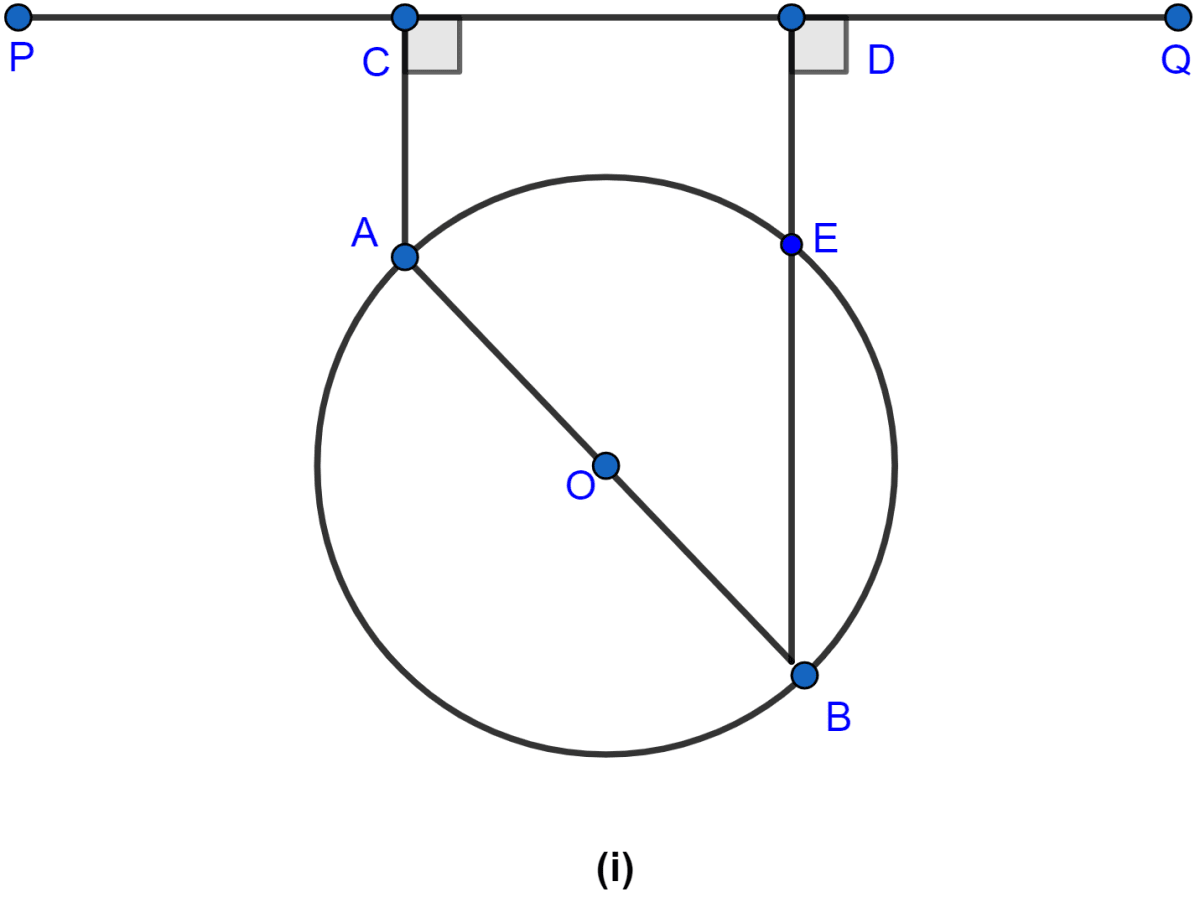
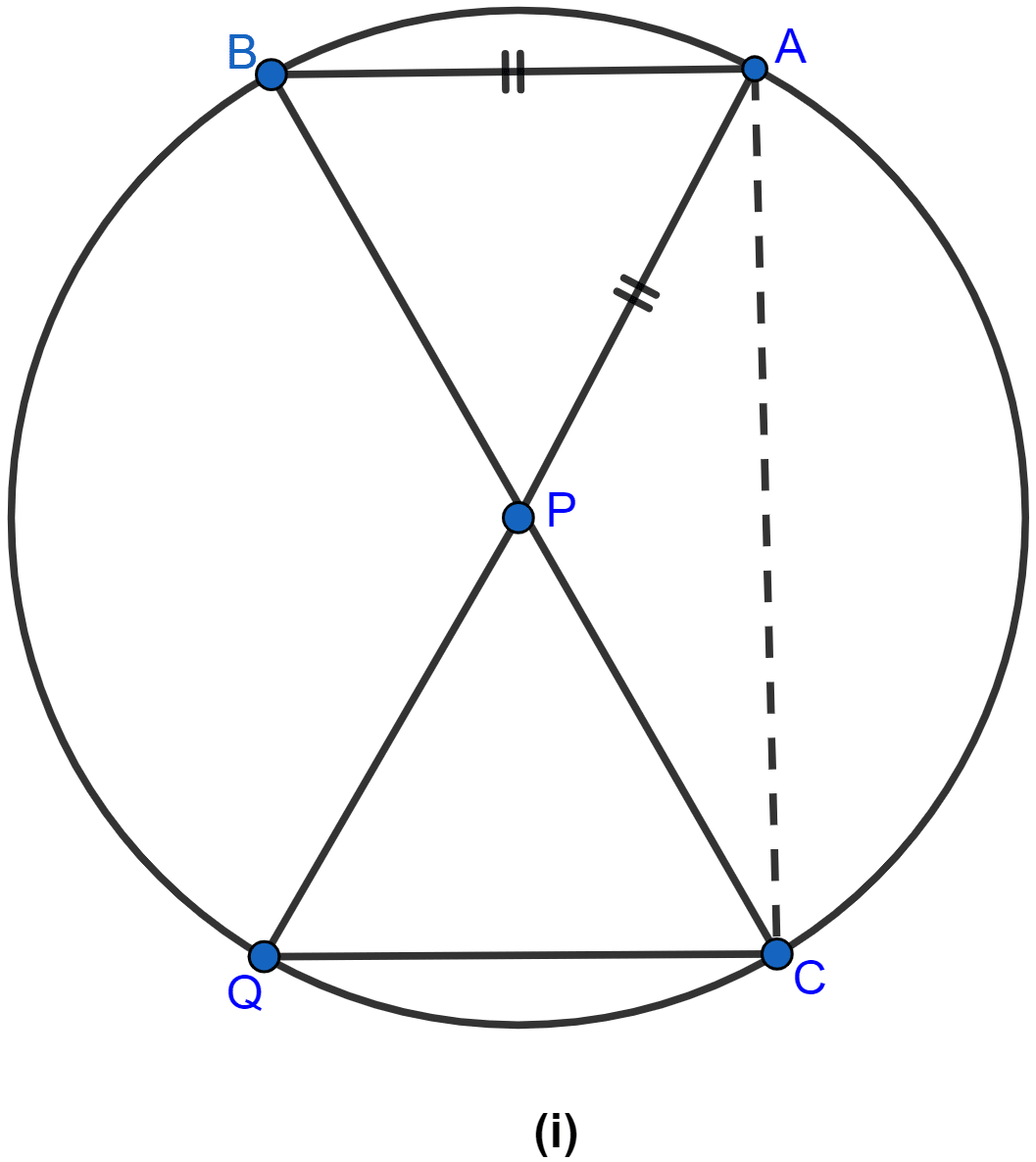
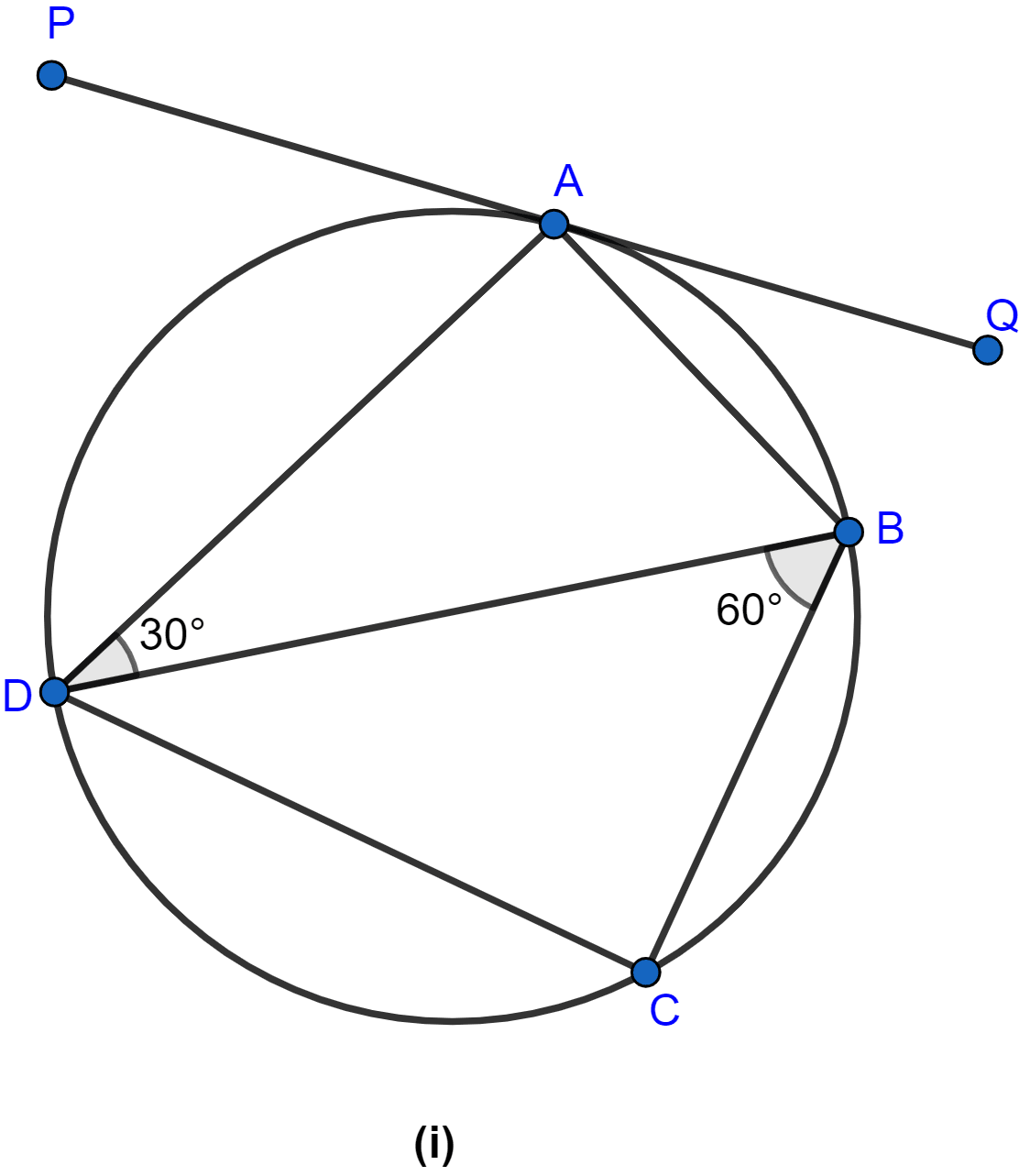
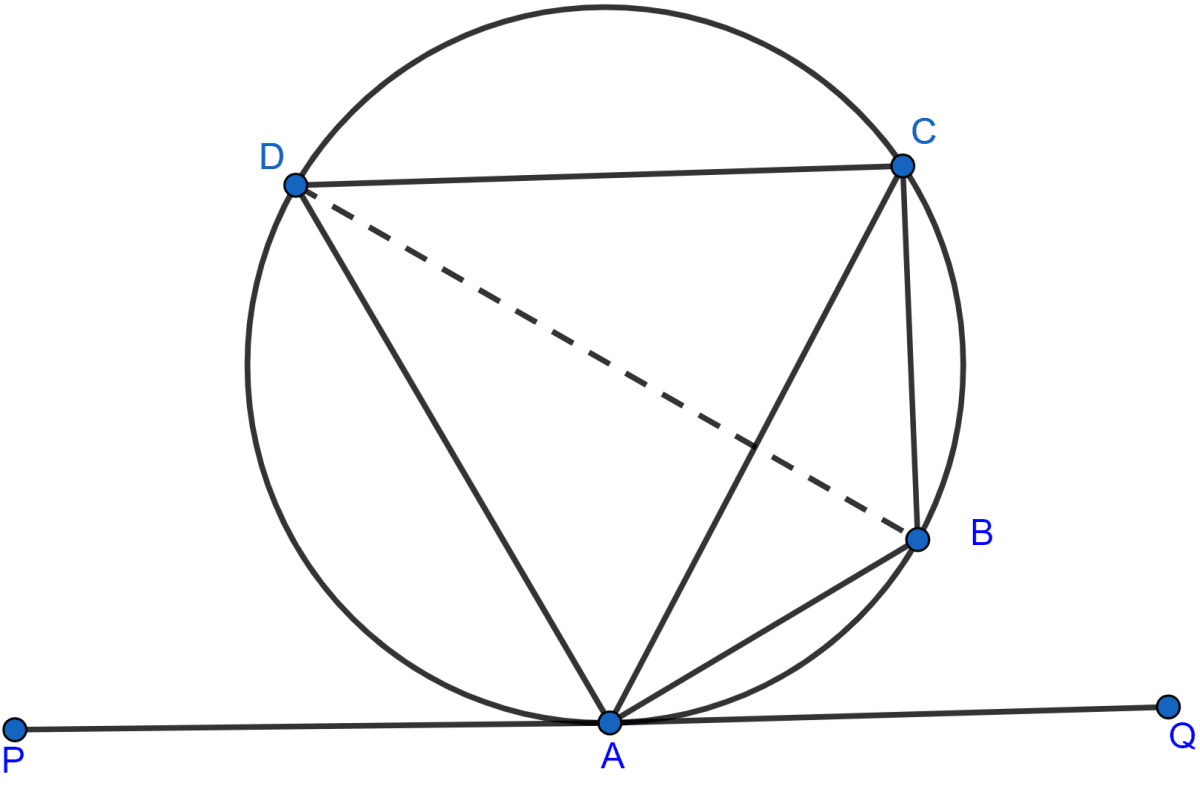
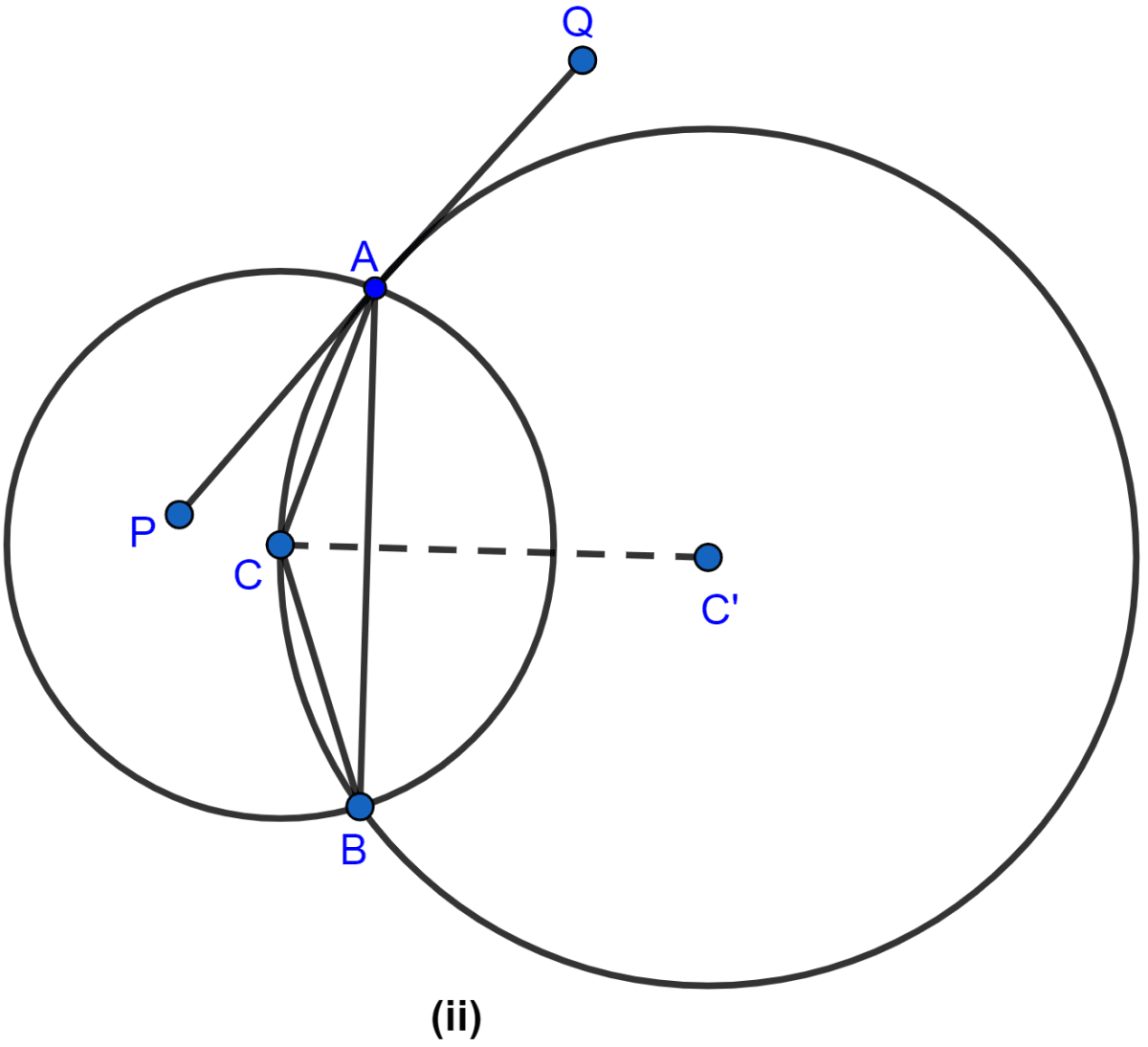
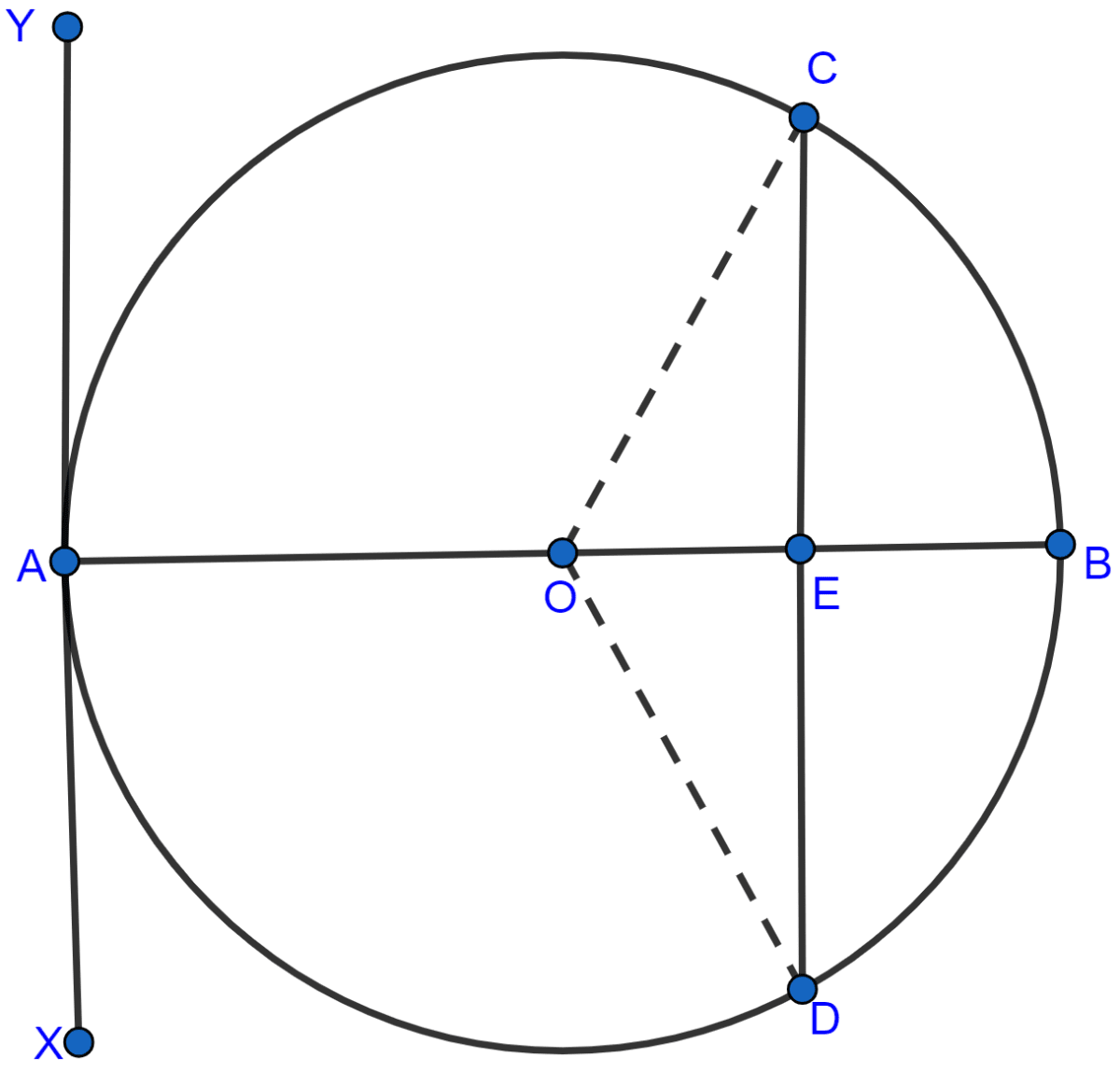
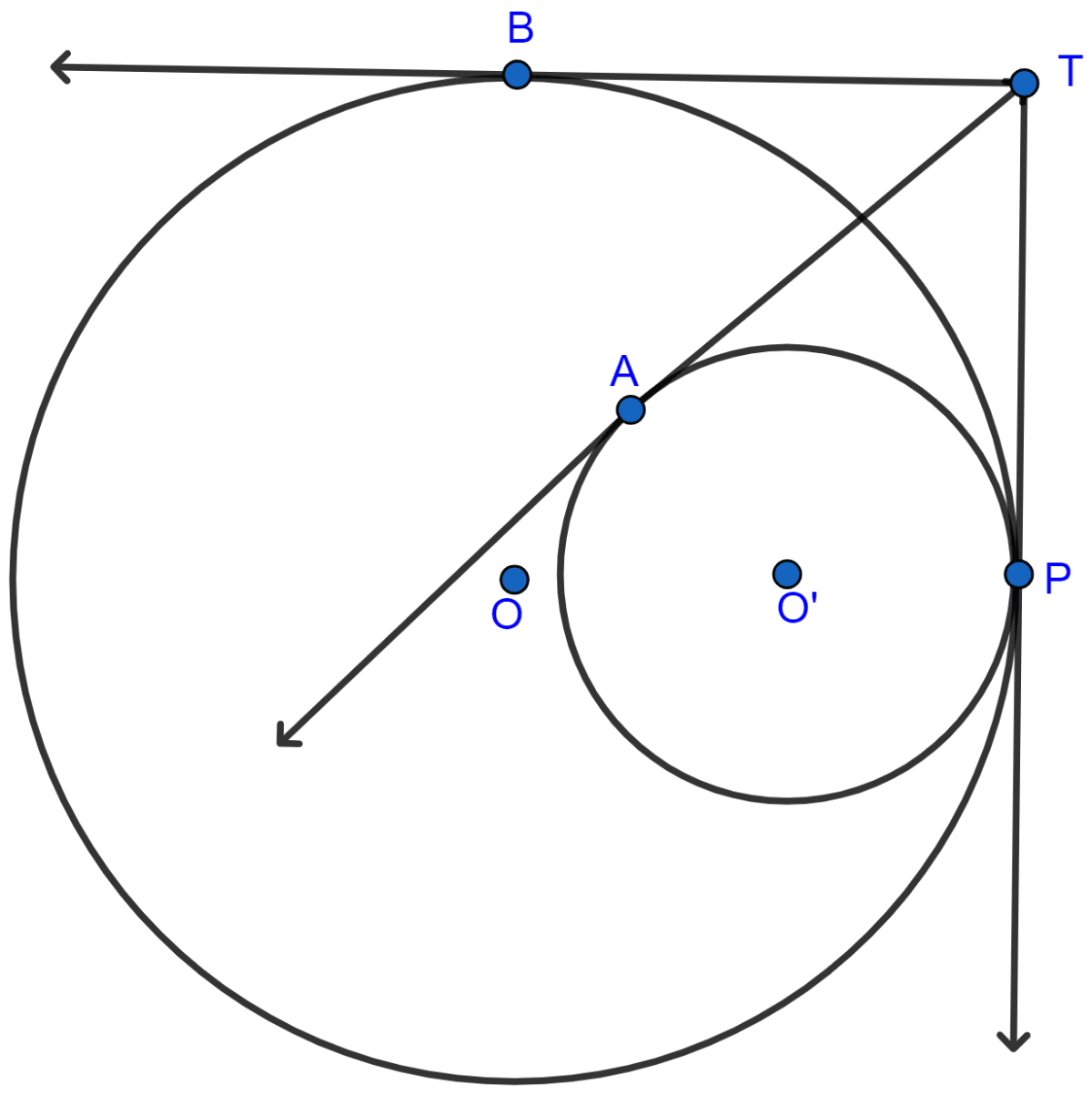
AB and AD are bisectors of ∠CAQ and ∠CAP respectively.
Let AB bisects ∠CAQ in two halves of each value x.
∴ ∠CAB = x and ∠BAQ = x.
Let AD bisects ∠CAP in two halves of each value y.
∴ ∠CAD = y and ∠DAP = y.
Since, ∠CAQ and ∠CAP are linear pair so,
⇒ ∠CAQ + ∠CAP = 180°
⇒ ∠CAB + ∠BAQ + ∠CAD + ∠DAP = 180°
⇒ x + x + y + y = 180°
⇒ 2x + 2y = 180°
⇒ x + y = $\frac{180°}{2}$
⇒ x + y = 90°.
∴ ∠CAB + ∠CAD = 90° ⇒ ∠BAD = 90°.
Since angle in semicircle is equal to 90°.
Hence, proved BD is the diameter of the circle.
Given, ∠CAQ : ∠CAP = 1 : 2.
Let ∠CAQ = k so ∠CAP = 2k.
Since ∠CAQ and ∠CAP are linear pair so,
⇒ ∠CAQ + ∠CAP = 180°
⇒ k + 2k = 180°
⇒ 3k = 180°
⇒ k = 60°.
∠CAQ = 60° and ∠CAP = 2 × 60° = 120°.
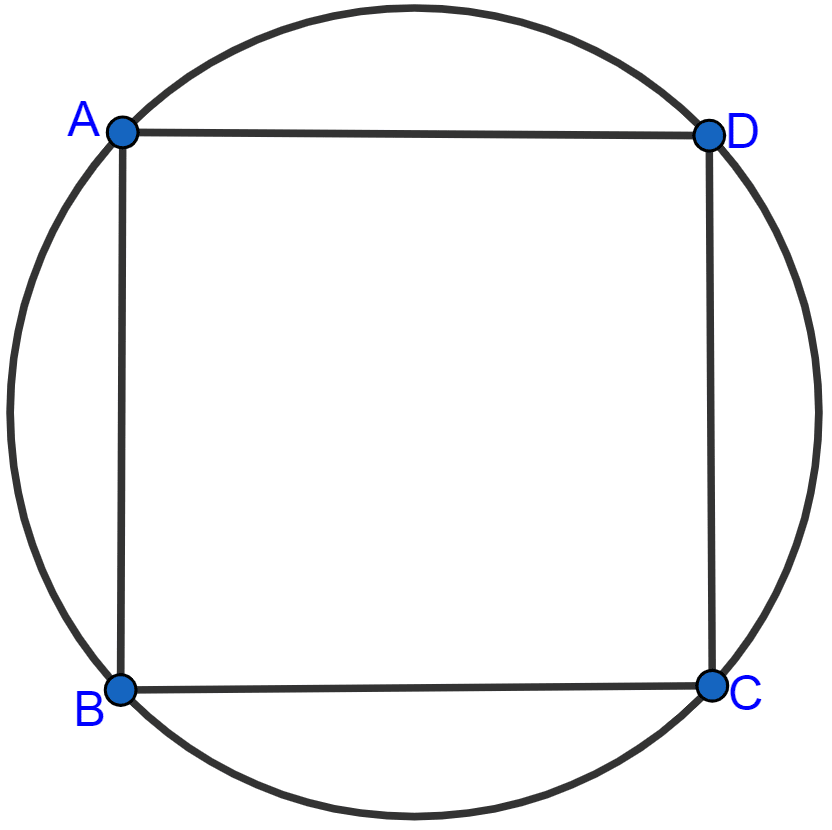
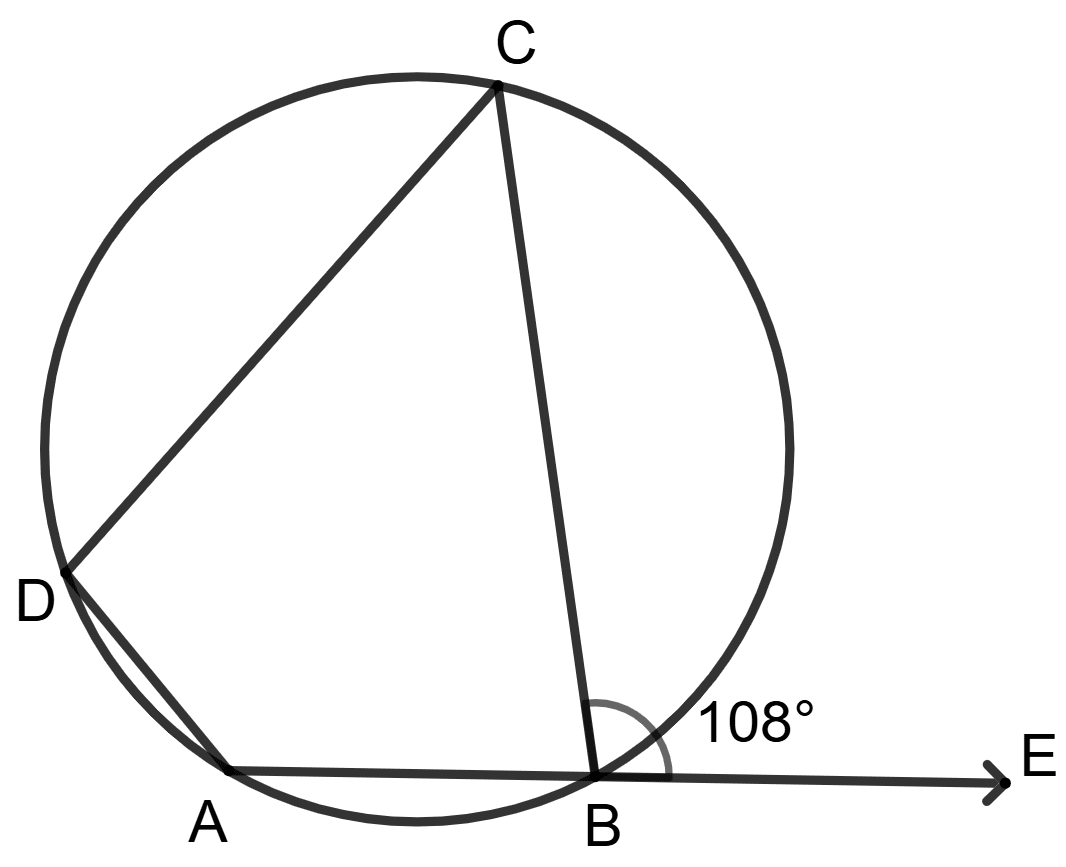
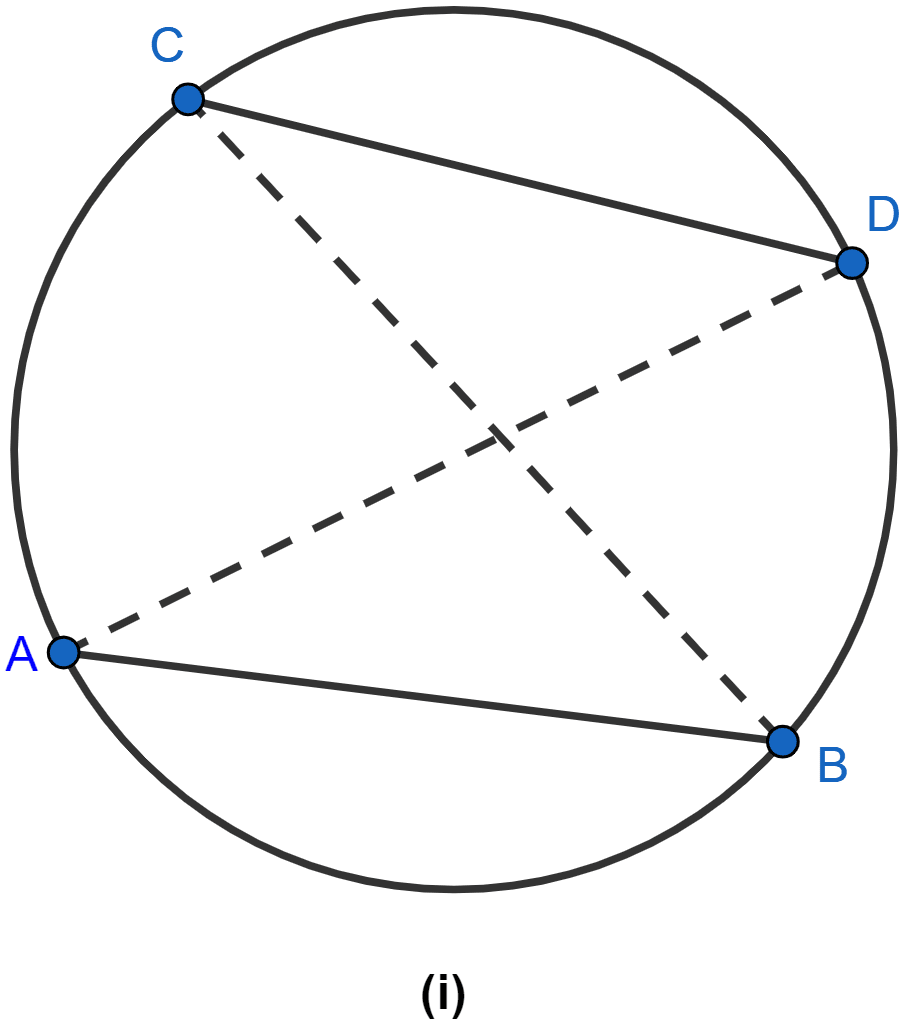
From figure,
∠ADC = ∠CAQ = 60° (∵ angles in alternate segments are equal)
∠ABC = ∠CAP = 120° (∵ angles in alternate segments are equal)
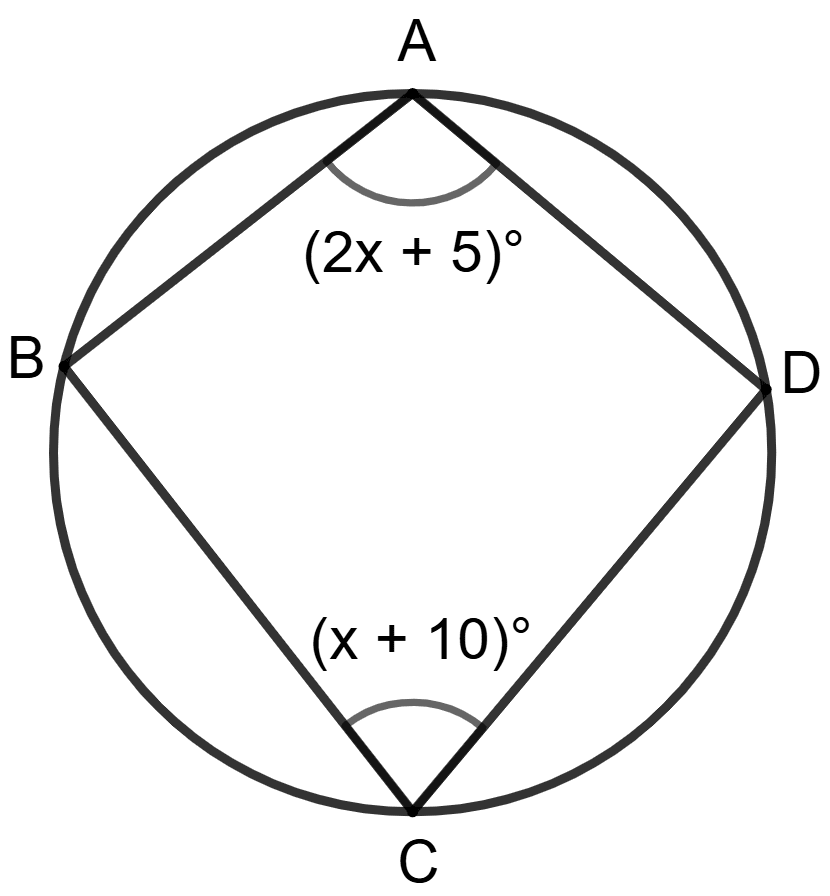
Since sum of opposite angles in cyclic quadrilateral is 180°.
⇒ ∠D + ∠B = 180°
⇒ 60° + ∠B = 180°
⇒ ∠B = 180° - 60°
⇒ ∠B = 120°.
Similarly,
⇒ ∠A + ∠C = 180°
⇒ 90° + ∠C = 180°
⇒ ∠C = 180° - 90°
⇒ ∠C = 90°.
Hence, the angles of cyclic quadrilateral are ∠A = 90°, ∠B = 120°, ∠C = 90° and ∠D = 60°.