ICSE Class 10 History & Civics · Total History & Civics · 33 solved questions
Exercise
Marks
11 Mark · Multiple Choice Questions
UNICEF is governed by an Executive Board consisting of ............... members.
(a)34
(b)36
(c)32
(d)38
Show SolutionHide Solution↓
36
Reason — UNICEF is governed by an Executive Board consisting of 36 members, elected by the Economic and Social Council (ECOSOC).
21 Mark · Multiple Choice Questions
Where is the Headquarters of the UNICEF located?
(a)New York, USA
(b)Washington, USA
(c)Florida, USA
(d)New Jersey, USA
Show SolutionHide Solution↓
New York, USA
Reason — UNICEF has its headquarters in New York and has more than 200 offices in developing countries.
31 Mark · Multiple Choice Questions
To finance its projects UNICEF depends on ................ .
(a)Voluntary contribution by governments
(b)Donations by private agencies
(c)Sale of Greetings cards
(d)All of the above
Show SolutionHide Solution↓
All of the above
Reason — For financing its projects, UNICEF depends on voluntary contributions made by different Governments, donations made by private agencies, sale of greeting cards and various fund-raising campaigns.
41 Mark · Multiple Choice Questions
The main focus of UNICEF is ................ .
(a)Healthcare
(b)Education
(c)Children's welfare
(d)Communication
Show SolutionHide Solution↓
Children's welfare
Reason — The main objective of UNICEF is to look after children's welfare, especially in developing countries, by providing low cost community-based services in maternal and child health, nutrition and immunisation.
51 Mark · Multiple Choice Questions
When is the World Health Day celebrated?
(a)April 14
(b)April 17
(c)April 8
(d)April 7
Show SolutionHide Solution↓
April 7
Reason — WHO was established on April 7, 1948, when 26 members of the United Nations ratified its Constitution. Hence, April 7 is celebrated as the World Health Day every year.
61 Mark · Multiple Choice Questions
Where is the headquarters of WHO located?
(a)New York, USA
(b)Geneva, Switzerland
(c)Paris, France
(d)Bern, Switzerland
Show SolutionHide Solution↓
Geneva, Switzerland
Reason — The headquarters of WHO are at Geneva in Switzerland.
71 Mark · Multiple Choice Questions
Which of the following diseases was not a part of programme to immunise children by WHO?
(a)Polio
(b)Tetanus
(c)Whooping cough
(d)Malaria
Show SolutionHide Solution↓
Malaria
Reason — WHO launched a programme to immunise children against six major diseases — Measles, Diphtheria, Tetanus, Tuberculosis, Polio and Whooping Cough. Malaria was not a part of this programme.
81 Mark · Multiple Choice Questions
Where was the conference held for the establishment of UNESCO?
(a)Paris
(b)Geneva
(c)London
(d)New York
Show SolutionHide Solution↓
London
Reason — A conference was held at London in November 1945 for the establishment of an educational, scientific and cultural organisation. This led to the establishment of UNESCO on 4th November 1946.
91 Mark · Multiple Choice Questions
Where is the Headquarters of UNESCO located?
(a)Bern
(b)Geneva
(c)Hague
(d)Paris
Show SolutionHide Solution↓
Paris
Reason — The headquarters of the UNESCO are in Paris.
101 Mark · Multiple Choice Questions
The largest sector of UNESCO's activity is in the field of:
(a)Education
(b)Science
(c)Culture
(d)Health
Show SolutionHide Solution↓
Education
Reason — The largest sector of UNESCO's activities is Education, as it works to promote education for all and improve the quality of education worldwide.
111 Mark · Multiple Choice Questions
Which of the following is NOT a function of UNESCO?
(a)Scientific Activities
(b)Communication
(c)Preservation of Cultural Heritage
(d)Research in Mythology
Show SolutionHide Solution↓
Research in Mythology
Reason — The functions of UNESCO cover education, scientific activities, communication and preservation of cultural heritage. Research in Mythology is not a function of UNESCO.
121 Mark · Multiple Choice Questions
In a remote village in Rwanda the infant mortality rate is one in every ten live births. Which agency of the UN could help this village?
(a)UNICEF
(b)WHO
(c)UNESCO
(d)None of the above
Show SolutionHide Solution↓
UNICEF
Reason — UNICEF works for the survival, protection and development of children by improving child health, nutrition, immunisation and reducing infant and child mortality.
131 Mark · Multiple Choice Questions
Which of the following is NOT a World Heritage Site?
(a)The Taj Mahal
(b)Ajanta Caves
(c)Delhi Public Library
(d)Agra Fort
Show SolutionHide Solution↓
Delhi Public Library
Reason — The Taj Mahal, Ajanta Caves, and Agra Fort are UNESCO World Heritage Sites, whereas the Delhi Public Library is not a World Heritage Site.
141 Mark · Multiple Choice Questions
Which of the following does not have Intangible Cultural Heritage Tag?
(a)Garba
(b)Durga Puja
(c)Ramlila
(d)Kathak
Show SolutionHide Solution↓
Kathak
Reason — Garba, Durga Puja and Ramlila have been inscribed on UNESCO's Representative List of the Intangible Cultural Heritage of Humanity. Kathak has not been given the Intangible Cultural Heritage tag.
151 Mark · Multiple Choice Questions
Your school is organising a handicrafts fair. You have gone to a village to seek craftsmen to participate in the fair. You realise that the village is facing a total lack of potable water. Besides the local government who else could help you?
(a)WHO
(b)UNESCO
(c)UNICEF
(d)Your school
Show SolutionHide Solution↓
UNICEF
Reason — UNICEF helps provide safe drinking water and sanitation facilities to improve the health and well-being of children and communities.
1Relationship between Statements (I) and (II)
(I) The United Nations Children's Fund's main objective is to look after children’s welfare especially in developing countries.
(II) UNICEF is a partner of the Indian government in the rural water supply programme.
(a)(II) contradicts (I)
(b)(II) is the reason for (I)
(c)(I) is true but (II) is false.
(d)(I) and (II) are independent of each other.
Show SolutionHide Solution↓
(I) and (II) are independent of each other.
Explanation — The United Nations Children’s Fund’s (UNICEF) main objective is to look after children’s welfare, especially in developing countries. This involves a wide range of activities, including education, healthcare, nutrition, and emergency relief. UNICEF partnering with the Indian government in the rural water supply programme is one of the many ways UNICEF works to improve children’s welfare.
2Relationship between Statements (I) and (II)
(I) WHO's objective is to attain the highest possible level of health by all people.
(II) WHO developed a vaccine to prevent COVID-19 pandemic and shipped it to over 100 countries.
(a)(II) contradicts (I)
(b)(II) is the reason for (I)
(c)(I) is true but (II) is false.
(d)(I) and (II) are independent of each other.
Show SolutionHide Solution↓
(I) is true but (II) is false.
Explanation — WHO's objective is to attain the highest possible level of health for all people. However, WHO did not develop the COVID-19 vaccine; it coordinated and supported global health efforts, so Statement II is false.
3Relationship between Statements (I) and (II)
(I) The largest sector of UNESCO's activity is in the field of education.
(II) The main function of the UNESCO is to identify the monuments in different parts of the world and declare them as World Heritage sites.
(a)(II) contradicts (I)
(b)(II) is the reason for (I)
(c)(I) is true but (II) is false.
(d)(I) and (II) are independent of each other.
Show SolutionHide Solution↓
(I) and (II) are independent of each other.
Explanation — Statement I describes UNESCO's largest area of activity (education), while Statement II states one of its functions—identifying and declaring World Heritage Sites. Statement II does not explain Statement I; therefore, both statements are independent.
4Relationship between Statements (I) and (II)
(I) Delhi Public Library was established in 1951 with financial assistance from UNESCO.
(II) UNESCO provides grants for organisation of library systems and promotion of international understanding through education.
(a)(II) contradicts (I)
(b)(II) is the reason for (I)
(c)(I) is true but (II) is false.
(d)(I) and (II) are independent of each other.
Show SolutionHide Solution↓
(II) is the reason for (I)
Explanation — UNESCO provides grants for the development of library systems. Therefore, it was able to provide financial assistance for establishing the Delhi Public Library in 1951, making Statement II the reason for Statement I.
5Relationship between Statements (I) and (II)
(I) UNESCO lays emphasis on education of women and children.
(II) UNESCO upholds the freedom of the Press and independence of the media.
(a)(II) contradicts (I)
(b)(II) is the reason for (I)
(c)(I) is true but (II) is false.
(d)(I) and (II) are independent of each other.
Show SolutionHide Solution↓
(I) and (II) are independent of each other
Explanation — Both the statements are two different functions of UNESCO.
1Short Answer Questions
Give the full form of these agencies of the UN: WHO and UNICEF. In which type of countries do the above agencies of UN work?
Show SolutionHide Solution↓
The full form of WHO is World Health Organization and the full form of UNICEF is United Nations International Children's Emergency Fund.
WHO and UNICEF especially work in developing countries.
2Short Answer Questions
Which agency of the UN looks after the interest of the children in the world? What was the original purpose of setting up this agency?
Show SolutionHide Solution↓
UNICEF looks after the interest of the children in the world.
Its original purpose was to help the emergency needs of children in post-war Europe.
3Short Answer Questions
How does UNICEF raise its funds?
Show SolutionHide Solution↓
UNICEF raises funds through:
Voluntary contributions from different governments.
Donations from private agencies and individuals.
The sale of UNICEF greeting cards and other fund-raising campaigns.
4Short Answer Questions
Where is the headquarters of UNICEF? Name two preventable diseases against which UNICEF organises its programmes.
Show SolutionHide Solution↓
The UNICEF has its headquarters in New York.
Two preventable diseases against which UNICEF organises its programmes are Malaria and Tuberculosis.
5Short Answer Questions
Mention some of the UNICEF programmes followed in India.
Show SolutionHide Solution↓
Some of the UNICEF programmes followed in India are:
The National Mission on Immunisation
The National Mission for Drinking Water
The National Literacy Mission.
6Short Answer Questions
What is the role of UNICEF in modern times?
Show SolutionHide Solution↓
In modern times, UNICEF:
Acts as the sole agency for children, speaks on their behalf, upholds the Convention on the Rights of the Child, and works for its implementation.
Supports programmes in maternal and child health, nutrition, clean drinking water, sanitation, and immunisation, especially through community-based services in countries like India.
7Short Answer Questions
Why was UNESCO established? Where is its headquarters located?
Show SolutionHide Solution↓
UNESCO was established to promote peace and security by encouraging collaboration among nations through education, science, culture and communication, and to promote respect for justice, the rule of law, and human rights.
Its headquarters is located in Paris, France.
1Structured Questions
The United Nations apart from its main organs also works through its allied agencies. In this context, answer the following questions:
(a) Write the expanded form of UNESCO. Mention two of its functions in the field of education.
(b) Explain three vital roles that the WHO plays in combating diseases.
(c) Mention any two functions of the UNICEF.
Show SolutionHide Solution↓
(a) UNESCO stands for United Nations Educational, Scientific and Cultural Organization. Two functions in the field of education are:
Removal of illiteracy by encouraging adult education, distance education and the open school system.
Laying emphasis on the education of women and girls.
(b) Three vital roles that the WHO plays in combating diseases are as follows:
It provides essential drugs and promotes immunisation against major diseases.
It promotes research to prevent and cure diseases.
It lays down international standards for the strength and purity of medicines, including biological products.
(c) Two functions of the UNICEF are as follows:
It works for the protection, survival, health and well-being of children.
It provides funds for training health and sanitation workers, teachers and nutritionists, and supports universal child immunisation.
2Structured Questions
With reference to UNESCO, answer the following questions:
(a) What were the objectives of the formation of UNESCO?
(b) How is the development of education, science and culture related to peace?
(c) What efforts have been made by UNESCO to preserve cultural heritage?
Show SolutionHide Solution↓
(a) UNESCO was established to:
Contribute to peace and security by promoting collaboration among nations through education, science, culture and communication.
Promote respect for justice, the rule of law, and human rights and fundamental freedoms for all people.
(b) Promotion of education, scientific spirit and enriching culture help in spreading peace and harmony in the world in the following ways:
Education provides people with knowledge and inspires them to make a better world.
Education results in increased economic growth and stability.
It is also an instrument for promoting international understanding and peace.
Sciences helps humans to always question superstitions.
It teaches not to follow any custom or practice blindly.
Social Sciences focus attention on combating all forms of discrimination.
Culture enriches the lives of individuals.
It makes people appreciate variety of customs and traditions and make them tolerant.
UNESCO works towards the cultural development through the medium of fine arts. It sends cultural missions to various countries.
This helps in promoting peace and prosperity
(c) UNESCO encourages modernisation without the loss of cultural identity and diversity.
UNESCO provides technical advice, equipment and financial assistance for the preservation of monuments and works of art.
It has prepared the World Heritage List to identify and protect important monuments and sites.
It works to protect books, works of art and rare manuscripts and encourages artistic creations in literature and fine arts.
It promotes cultural development through films and cultural missions, encouraging international understanding and cooperation.
3Structured Questions
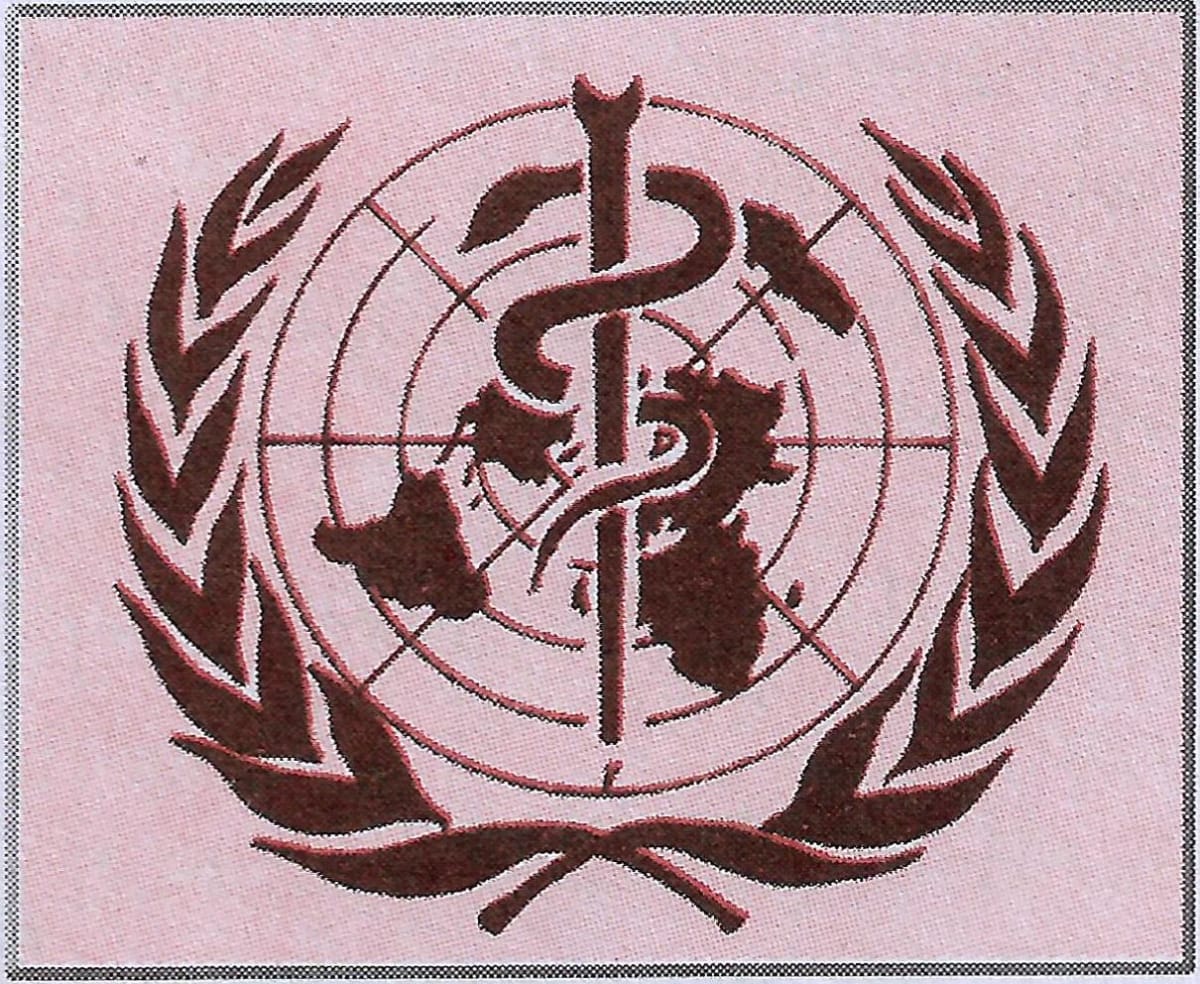
Study the picture and answer the following questions:
(a) Identify the organisation associated with the given emblem. Where is its headquarters located? Name two sources from where this organisation gets its funds.
(b) What is the main objective of this organisation? State any two functions of this organisation.
(c) Mention any two achievements of this organisation.
Show SolutionHide Solution↓
(a) The picture shows the emblem of World Health Organization. The headquarters of WHO are at Geneva in Switzerland. The World Health Organization (WHO) gets its funding from two main sources:
Assessed Contributions: These are the dues countries pay in order to be a member of the Organization. The amount each Member State must pay is calculated relative to the country’s wealth and population.
Voluntary Contributions: These come from Member States (in addition to their assessed contribution) or from other partners. In recent years, voluntary contributions have accounted for more than three quarters of the Organization’s financing.
(b) The main objective of WHO is the attainment of the highest possible level of health by all people. 'Health' in terms of WHO covers complete well being of an individual.
Two functions of WHO are as follows:
It helps countries to improve their health system by building up infrastructure especially manpower, institutions and services for the individual and community.
It gives important drugs needed for medical care. The WHO launched a programme to immunise children against six major diseases—Measles, Diphtheria, Tetanus, Tuberculosis, Polio and Whooping Cough.
(c) Two achievements of World health organisation are:
Development of an Ebola vaccine.
A decline of 40 percent in the number of deaths from Tuberculosis.
4Structured Questions
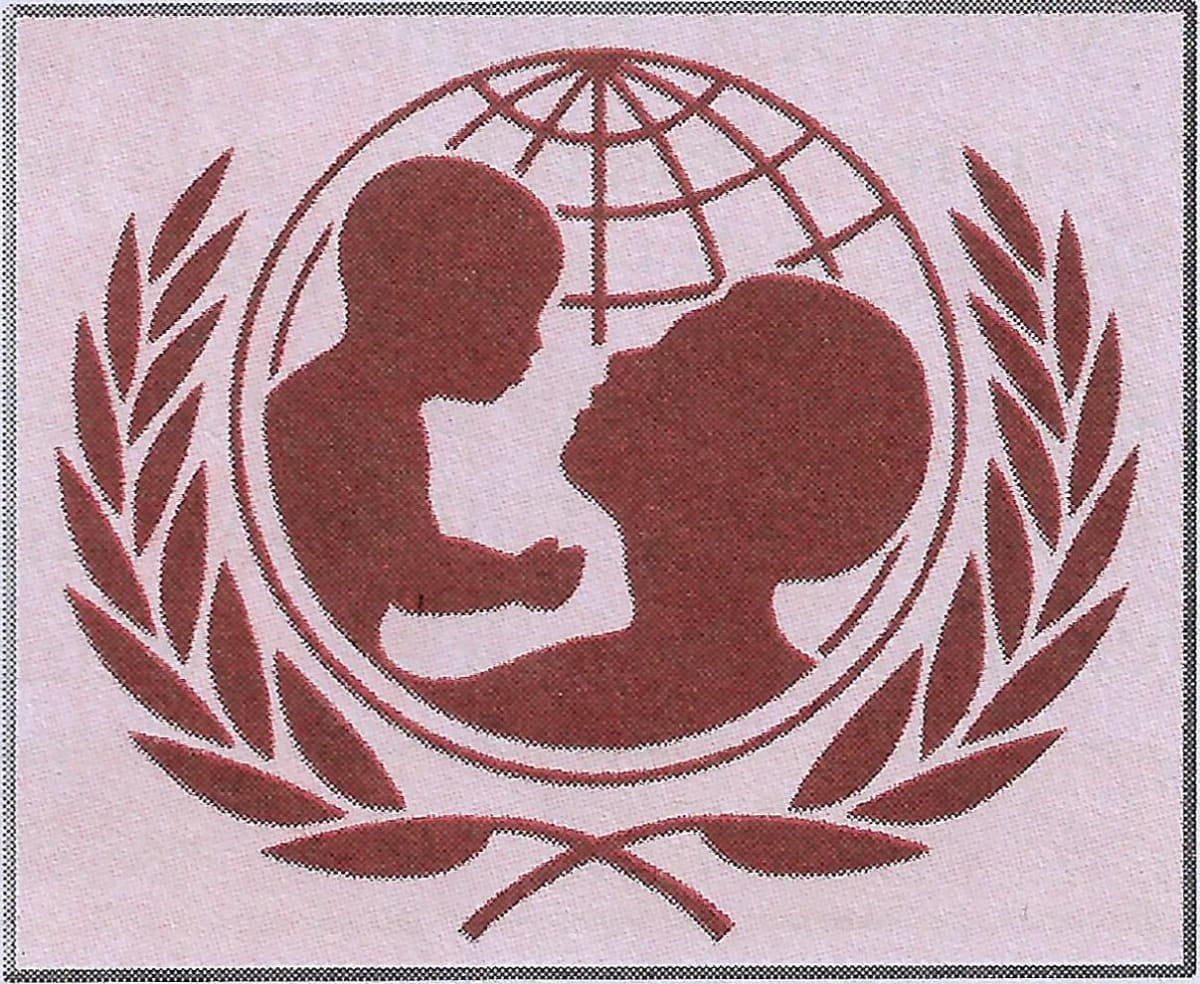
Study the emblem and answer the following questions:
(a) Name the organisation associated with the emblem.
(b) Mention any three functions of the organisation named by you.
(c) Mention any two programmes of this organisation in India.
Show SolutionHide Solution↓
(a) The picture shows the emblem of UNICEF.
(b) Three functions of UNICEF are as follows-
It works for the protection of children in respect of their survival, health, and well-being.
It provides funds for training personnel, including health and sanitation workers, teachers and nutritionists. Universal Child Immunisation against preventable diseases was one of the leading goals of UNICEF.
It assists governments to plan, develop and extend community-based services in the fields of maternal and child health, nutrition, clean water and sanitation.
(c) Two programmes of this organisation in India are:
Community Development Programme has been started in the rural areas of India with UNICEF's assistance, aimed at maternal and child health.
The National Mission on Immunization was launched by government of India in collaboration with UNICEF.
1Higher Order Thinking Skills
Do you think that the major agencies of the United Nations have lived up to the agenda for which they were created? Give reasons to support your answer.
Show SolutionHide Solution↓
Yes, the major agencies of the United Nations have lived up to the agenda for which they were created because of the following reasons:
The World Health Organisation (WHO) has made immense contributions towards world health. It helped eradicate Smallpox, Polio is near eradication, developed an Ebola vaccine, played a significant role in combating the COVID-19 crisis and so on.
The efforts of the UNICEF helped save the lives of more than 90 million children across the world.
UNESCO preserves 1073 World Heritage Sites in 167 countries. It finances engineering and technology schemes in a number of developing countries and promotes research in the fields of geology, mathematics, physics and oceanography.
2Higher Order Thinking Skills
If you were given a choice to work for any one of the major agencies of the UN, which one will you choose and why?
Show SolutionHide Solution↓
I would like to work for the UNICEF because I am very much inspired by its mission to advocate for the protection of children's rights, to help meet their basic needs and to expand their opportunities to reach their full potential. The younger generation is very important for every country as they play a critical role in nation building and the progress of the country and in turn the whole world. I think providing a conducive atmosphere for development of children is the single most important thing that developing countries like ours should focus on. As UNICEF works to look after children's welfare especially in developing countries so I would like to be a part of UNICEF and make my contributions to make the world a better place.