Duplicated chromosomes are joined at a point termed:
- (a)Centrosome
- (b)Centromere
- (c)Centriole
- (d)Chromatid
Show SolutionHide Solution↓
Centromere
Reason — Duplicated chromosomes (sister chromatids) are joined at a point termed Centromere.
50 solved questions from Solved 2024 Question Paper ICSE Class 10 Biology. Every answer follows the ICSE marking scheme.
Duplicated chromosomes are joined at a point termed:
Centromere
Reason — Duplicated chromosomes (sister chromatids) are joined at a point termed Centromere.
The process of conversion of ADP to ATP during photosynthesis is called:
Photophosphorylation
Reason — Photophosphorylation is the synthesis of ATP (adenosine triphosphate) from ADP (adenosine diphosphate) and inorganic phosphate (Pi) using light energy (photons).
The process in which water is lost from the margins of strawberry leaves is:
Guttation
Reason — Guttation is the exudation of water from the tip or edges of leaves of some herbaceous plants.
The hormone that affects urination is:
Vasopressin
Reason — Vasopressin is produced by the posterior pituitary gland. Also known as ADH (Anti-diurectic hormone), it plays role in reabsorption of water in kidneys.
Which one of the following helps in the opening of stomata:
Potassium ions
Reason — During sunlight K⁺ ions rush into the guard cells. It is followed by osmosis. The guard cells then swell, and the stomata opens.
A zygote which has Y chromosome inherited from the father will develop into a:
Boy
Reason — Child always inherits X chromosome from the mother, and either X or Y chromosome from father. If X chromosome is inherited from father, a girl child develops and inheritance of a Y chromosome results in a boy.
The ear ossicle that transports sound vibrations to the inner ear:
Stapes
Reason — It is the smallest bone in the human body and plays a crucial role in transmitting sound vibrations from the tympanic membrane (eardrum) to the oval window of the cochlea in the inner ear.
If a person has a heart attack, what must be done immediately?
P. Loosen his/her clothing
Q. Make him/her lie down in an airy room
R. Rush him/her to the hospital
S. Engage him/her in a conversation
P, Q and R
Reason — Engaging in conversation may exhaust the patient. Loosening clothes, ventilated room and taking the patient to the hospital are things that should be done as quickly as possible.
Adjusting the focal length of the eye lens to view objects at different distances is done by:
Ciliary muscles
Reason — The contraction and relaxation of ciliary muscles lead to adjustment of focal length of eye.
Four friends P, Q, R and S were discussing the examples of genetic disorders. The examples they quoted were as follows:
P. Colour blindness and Malaria
Q. Albinism and Cholera
R. Haemophilia and Colour blindness
S. Haemophilia and Albinism
Who gave the correct examples?
R and S
Reason — Malaria and Cholera are not genetic disorders. They are caused by plasmodium and bacteria respectively. Haemophilia, Colour blindness and Albinism are genetic disorders.
Osmosis takes place when there is:
A selectively permeable membrane
Reason — Osmosis takes place through a selectively permeable, differentially permeable or semi-permeable membrane.
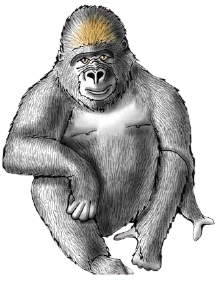
A male gorilla has 48 chromosomes in each of its body cells. How many chromosomes will each of the sperms have?

24
Reason — Gametes are haploid i.e., they have half the number of chromosomes present in somatic cells.
Assertion (A): Sympathetic nervous system prepares the body for violent action against abnormal conditions.
Reason (R): Sympathetic nervous system accelerates heartbeat.
Which of the following is correct?
Both A and R are True
Reason — The Sympathetic nervous system prepares our body for action when faced with danger, stress, or excitement. It’s the ultimate “fight-or-flight” response coordinator.
Birth rate is the number of live births per thousand persons in:
1 year
Reason — Birth rate represents the total number of live human births per 1,000 population during a year.
Industrial Melanism was observed in:
Peppered Moth
Reason — This phenomenon refers to the darkening of the moth's wings due to natural selection driven by pollution-induced changes in the environment during the Industrial Revolution in England.
Name the following:
(a) Unicellular outgrowths from the epidermis of roots.
(b) A defect in our eyes, in which some parts of the object are in focus while the other parts are blurred.
(c) The tropic movement of plant parts in response to chemicals.
(d) The main nitrogenous waste formed in the body.
(e) The process of attachment of fertilized ovum to the wall of uterus.
(a) Root hairs
(b) Astigmatism
(c) Chemotropism
(d) Urea
(e) Implantation
Arrange and rewrite the terms in each group in the correct order to be in a logical sequence beginning with the term that is underlined:
(a) Australopithecus, Cro-Magnon, Homo erectus, Neanderthal man.
(b) Pupil, Aqueous humour, Retina, Vitreous humour.
(c) Effector, Receptor, Motor neuron, Sensory neuron.
(d) Loop of Henle, Distal convoluted tubule, Bowman’s Capsule, Proximal convoluted tubule.
(e) Water vapour, Soil water, Leaves, Ascent of Sap
(a) Australopithecus → Homo erectus → Neanderthal man→ Cro-Magnon
(b) Aqueous humour → Pupil→ Vitreous humour → Retina
(c) Receptor→ Sensory neuron → Motor neuron→ Effector
(d) Bowman’s Capsule → Proximal convoluted tubule→ Loop of Henle → Distal convoluted tubule
(e) Soil water → Ascent of Sap → Leaves → Water vapour
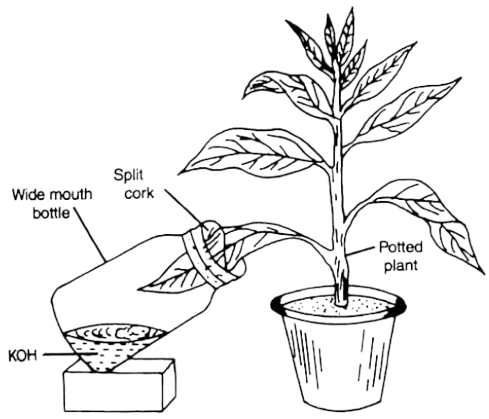
Study the diagram given below and fill in the blanks with suitable words:
In order to prove that carbon dioxide is necessary for (a) ............... , a potted plant is placed in dark for 48 hours to (b) ............... the leaves. A part of a leaf is inserted into a conical flask containing potassium hydroxide solution. This is to absorb (c) ............... from the flask. The plant is then placed in sunlight for a few hours. The experimental leaf is tested for starch. The part of the leaf that was inside the conical flask turns (d) ............... , whereas the part of the leaf outside turns (e) ............... in colour.
In order to prove that carbon dioxide is necessary for (a) photosynthesis , a potted plant is placed in dark for 48 hours to (b) destarch the leaves. A part of a leaf is inserted into a conical flask containing potassium hydroxide solution. This is to absorb (c) carbon dioxide from the flask. The plant is then placed in sunlight for a few hours. The experimental leaf is tested for starch. The part of the leaf that was inside the conical flask turns (d) brown , whereas the part of the leaf outside turns (e) blue-black in colour.
Choose the odd one out from the following terms and name the category to which the others belong:
(a) Prothrombin, Thrombin, Fibrinogen, Albumin
(b) Tonsils, Glomerulus, Spleen, Lymph nodes
(c) Neutrophils, Basophils, Monocytes, Eosinophils
(d) Leaves, Styrofoam, Grass, Cow Dung
(e) Pulmonary artery, Renal artery, Coronary artery, Hepatic artery
(a) Odd one : Albumin
Prothrombin, Thrombin, Fibrinogen — Involved in clotting of blood.
(b) Odd one : Glomerulus
Tonsils, Spleen, Lymph nodes — Parts of the lymphatic system.
(c) Odd one : Monocytes
Neutrophils, Basophils, Eosinophils — Granular WBCs or Granulocytes.
(d) Odd one : Styrofoam
Leaves, Grass, Cow Dung — Biodegradable substances.
(e) Odd one : Pulmonary artery
Renal artery, Coronary artery, Hepatic artery — Carry oxygenated blood.
Match the items given in Column I with most appropriate ones in Column II and rewrite the correct matching pairs:
| Column I | Column II |
|---|---|
| (a) Leydig Cells | Lack of thyroxine in children |
| (b) Stoma | 12 pairs |
| (c) Ova | Testosterone |
| (d) Cranial nerve | Diffusion of respiratory gases |
| (e) Cretinism | Haploid cells |
| 31 Pairs | |
| Diploid cells |
| Column I | Column II |
|---|---|
| (a) Leydig Cells | Testosterone |
| (b) Stoma | Diffusion of respiratory gases |
| (c) Ova | Haploid cells |
| (d) Cranial nerve | 12 pairs |
| (e) Cretinism | Lack of thyroxine in children |
Expand the abbreviation-NADP.
NADP - Nicotinamide Adenine Dinucleotide Phosphate.
Mention two adaptations in roots for absorption of water from the soil.
Two adaptations in roots for absorption of water from the soil are:
Differentiate between Afferent arteriole and Efferent arteriole (diameter).
Difference between Afferent arteriole and Efferent arteriole (diameter):
Afferent arteriole — This arteriole is larger in diameter compared to the efferent arteriole.
Efferent arteriole — This arteriole is smaller in diameter compared to the afferent arteriole.
Give two examples of water pollutants.
Two examples of water pollutants are:
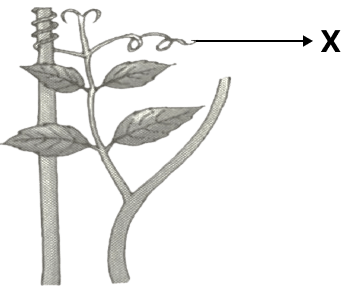
Ali has some pea plants in his garden which need a support to grow as seen in the picture given below:
(a) Name the phenomenon depicted by the shoot in the given figure.
(b) Define the above phenomenon.
(c) Write the name of the part marked X.
(a) Thigmotropism.
(b) The growth movement of plant parts in response to touch stimulus is called Thigmotropism.
(c) X → Leaf Tendril
Give the biological term for the surgical method of contraception in human females.
Tubectomy.
State two harmful effects of acid rain on the environment.
Two harmful effects of acid rain on the environment are:
Mention two advantages of Transpiration.
Two advantages of transpiration are:
Write any two objectives of Swachh Bharat Abhiyan.
Two objectives of Swachh Bharat Abhiyan (Clean India Mission) are:
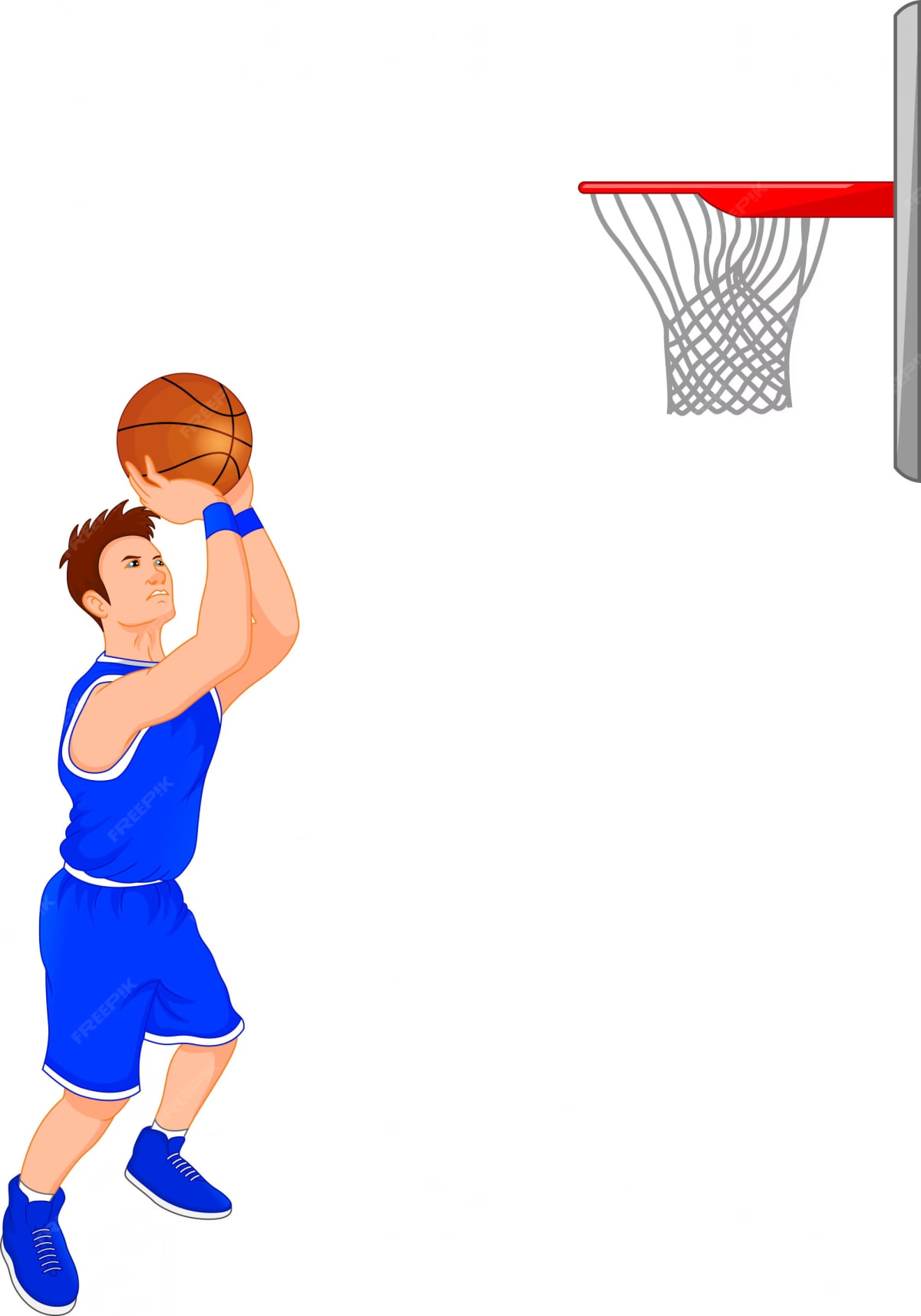
Mohan is fond of playing basketball. His concentration is on shooting the ball into the opponent’s basket as given in the picture.
(a) Which part of the brain helps Mohan to concentrate in putting the ball into the basket?
(b) Name the sense organ that helps to gauge the distance between the ball and the basket.
(c) Name the part of the brain that co-ordinates all the voluntary muscles of his body.
(a) Frontal lobe or cerebral cortex.
(b) Eyes.
(c) Cerebellum.
Name the type of nerve which has the fibres of both sensory and motor neurons.
Mixed nerve.
Differentiate between Australopithecus and Modern man based on body hair.
Difference between Australopithecus and Modern man based on body hair:
| Australopithecus | Modern man |
|---|---|
| Body hair covered much of the body of Australopithecus. | Modern man has highly reduced body hair. |
"Birth rate in India is very high." Mention two reasons in support of the statement.
The birth rate in India is very high because :
Give the exact location of:
(a) Pericardium
(b) Bicuspid valve
(a) Pericardium — Protective double-walled membranous covering that surrounds the heart.
(b) Bicuspid valve — Located between the left atrium and the left ventricle of the heart.
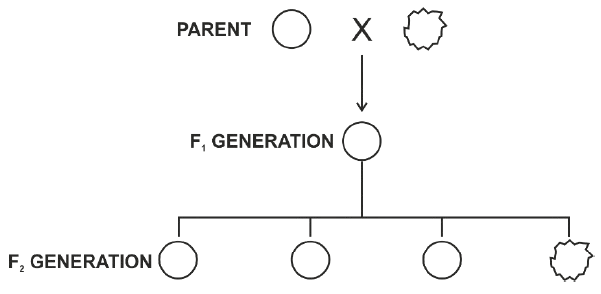
Given below is a schematic representation of the inheritance of the shape of seeds of garden pea. Answer the questions that follow:
(a) Which is the dominant and recessive allele of the trait?
(b) What does the ratio 3 : 1 in the F2 generation represent?
(c) State Mendel’s Law of Dominance.
(a) The allele for smooth seeds are dominant over wrinkled seeds which are recessive.
(b) The ratio 3:1 indicates the observed ratio of different phenotypes (observable traits) in the F2 generation. It means that out of every 4 individuals in the F2 generation, approximately 3 individuals will exhibit one phenotype (typically the dominant trait) and 1 individual will exhibit the other phenotype (typically the recessive trait).
(c) Out of a pair of contrasting characters present together, only one is able to express itself while the other remains suppressed. The one that expresses is the dominant character and the one that is unexpressed is the recessive one.
Define the term-Diapedesis.
Diapedesis is the process by which white blood cells (WBCs) squeeze through capillary walls into tissues, using amoeboid-like extensions called pseudopodia to reach sites of infection or inflammation.
Distinguish between Diabetes mellitus and Diabetes insipidus (endocrine gland concerned).
Difference between Diabetes mellitus and Diabetes insipidus based on the endocrine gland concerned:
| Diabetes mellitus | Diabetes insipidus |
|---|---|
| Islets of Langerhans of the Pancreas are concerned with Diabetes mellitus. | Posterior lobe of the pituitary gland is concerned with Diabetes insipidus. |
Carbon monoxide is dangerous when inhaled in excess. Comment on the statement.
Haemoglobin has very strong affinity for carbon monoxide, forming a stable compound carboxyhaemoglobin. This cuts down the capacity of blood for transporting oxygen, sometimes resulting in death. Hence, Carbon monoxide is highly dangerous when inhaled.
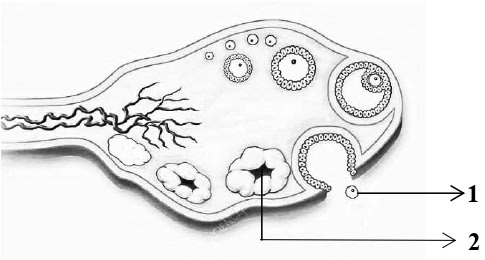
The diagram given below shows a section of the human ovary.
(a) Name the process for the release of the part labelled 1.
(b) Write the name of the structure marked 2.
(a) Ovulation
(b) Corpus luteum
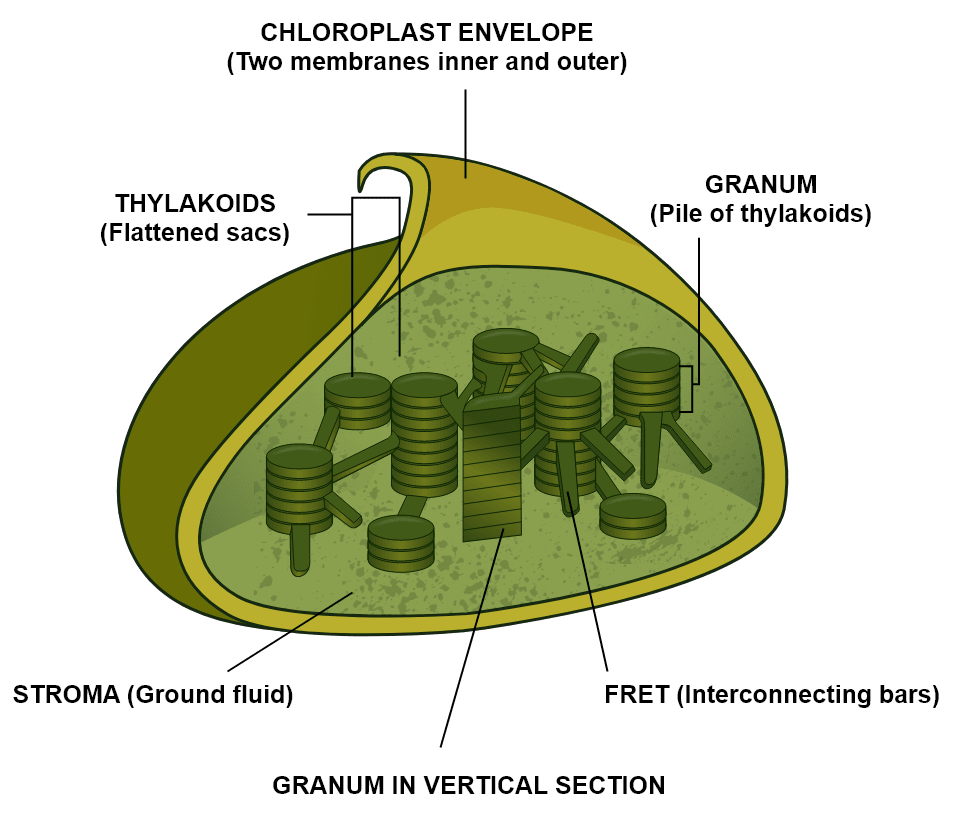
Draw a neat, labelled diagram of a chloroplast.
Labelled diagram of the chloroplast is shown below:

Define the term hormone.
Hormone is a secretion from some glandular part of the body, which is poured directly into blood and which acts on the target organs or cells of the same individual, bringing about coordination between distant parts of the body.
Which parts of the ear are responsible for:
(a) Static equilibrium?
(b) Dynamic equilibrium?
(a) Static equilibrium : Vestibule
(b) Dynamic equilibrium : Semicircular canals
Mention two structural differences between an artery and a vein.
Two structural differences between an artery and a vein are:
| S. No. | Arteries | Veins |
|---|---|---|
| 1. | Arteries have thick and muscular walls. | Veins have thin and less muscular walls. |
| 2. | Have narrower lumen. | Have wider lumen. |
Write any two limitations of using a Ganong's Potometer to demonstrate the uptake of water.
Two limitations of using a Ganong's Potometer to demonstrate the uptake of water are:
A teacher drew the diagram of heart on the blackboard and told the students to copy it in their notebooks. Mahesh couldn’t see the diagram clearly as it appeared blurred to him.
(a) Name the defect of the eye Mahesh is suffering from.
(b) Where is the image formed in this defect?
(c) Mahesh consults an eye doctor and is prescribed suitable lenses to correct the defect. Which type of lens do his spectacles have?
(a) Mahesh is suffering from myopia, also known as nearsightedness.
(b) In myopia, the image is formed in front of the retina, instead of directly on the retina.
(c) To correct myopia, Mahesh would need concave lenses.
Define the term ultrafiltration.
The blood flows through the glomerulus under great pressure which causes the liquid part of the blood to filter out from the glomerulus into the renal tubule. This filtration under high force is called Ultrafiltration.
Name the mineral elements required for:
(a) Clotting of blood
(b) Synthesis of thyroxine
(a) Clotting of blood : Calcium
(b) Synthesis of thyroxine : Iodine
Mention two harmful effects of noise pollution.
Two harmful effects of noise pollution are:
Why are RBCs efficient in their functions though they lack nucleus and mitochondria?
RBCs are efficient in their functions though they lack nucleus and mitochondria because:
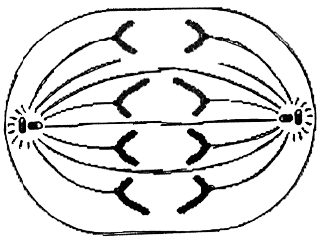
The diagram given below represents a stage in mitosis.
(a) Identify the stage given above.
(b) Give one reason to support your answer in (a).
(c) Mention the number of chromosomes given in the diagram.
(a) Early Anaphase
(b) In Early Anaphase the sister chromatids separate and start moving towards the opposite poles. This is due to contraction of spindle fibre.
(c) There are four chromosomes in the given diagram.
Press ↓ to reveal a solution and move to the next question. Browse the free sample bank.